How Are We to View the Books of the Bible?

What should be our mindset when we open the Bible?  How did these books come into being?  This is a core question that isn’t often addressed. What other essential questions must we ask ourselves about our belief in Biblical texts?  

Most folks don’t think very hard about using the phrase “the Bible.”  We often assume we’re communicating with people who already agree with us about what “the Bible” is, but that’s not always the case.  Scholars hold that there is no single Bible because the Bible as we know it today is a collection of texts written by more than one hundred authors and as many or more editors who wrote, edited, and compiled the Bible in three different languages across two continents over the course of eleven centuries.  The Bible is the result of a compilation process — and there have been many compilations.  

In the 21st Century, the most popular translations include, but are not limited to, the King James Version (KJV), the New International Version (NIV), the English Standard Version (ESV), the New Living Translation (NLT), and the New American Standard Bible (NASB).  These versions trade off readability and fidelity to the original texts to appeal to different audiences with varying goals when reading the Bible. 

Inspiration, Inerrancy, and Univocality

My starting point is to ask three relevant questions. 1) Is the Bible the inspired word of God?  2) Are biblical texts inerrant?   3)  Do Biblical texts speak with one single, unified, and consistent voice and from one single, unified, and consistent perspective?

Since no supporting data exists for any of these beliefs, they can only be asserted. In a discussion about what the Bible says, those assertions can mean anything only if the participants agree to grant them that authority.  

While the Bible can occasionally be used as a historical document, it contains many gaps.  Some suggest that this is where many biblical innovations have been carefully curated to fill gaps in stories lacking critical details.  Dan McClellan, a modern-day biblical scholar, strongly advocates interpreting the books of the Bible literarily rather than literally, considering the author’s rhetorical goals.  He offers the following explanation:

“Every last word of the bible is a piece of literature, meaning a human author wrote it down with a specific literary genre or combination of genres or innovations on literary genres in mind using conventions and idioms and allusions to try to draw out their rhetorical goals which usually had more to do with the structure of power, values, or boundaries than with just reporting on an event.  And so we don’t do justice to what the authors were trying to convey with their texts when we ignore all that and just imagine how these things would have happened historically.  In addition to the fact that that’s not what the authors want you to do with the text. Most of what we have in the Bible has no historical reality behind it.  The stories in the bible are overwhelmingly literary creations, so they never existed on anything other than a literary level.  So, when we try to create a historical background for what is going on, we are merely making things up, which will not lead us to a better understanding of what the author was trying to convey; it will lead us to a worse understanding.  The authors had several objectives in mind when creating the texts, and if we overlook these, we will not have a good chance of understanding what made those texts meaningful and valuable to them.  Instead, we will overwhelmingly subordinate the texts to our own rhetorical goals — what we want the text to do for us.”  — Dan McClellan

Though not his primary goal, McClellan undermines the foundation of the Church’s basic tenets. Adam, Eve, Abraham, and Isaac are post-biblical innovations, along with the Trinity, Original Sin, the Virgin Birth, and Biblical Inerrancy.  McClellan is an educator and, thankfully, an honest voice sharing his knowledge with anyone who will listen without regard to whose feathers might get ruffled.  

His opinion appears to be in the minority regarding the views of church leadership, but is he wrong?  Or is he a trailblazer?  He’s got an enormous following on social media over 1 million followers, and those who challenge him on an intellectual level usually lose badly.  Facts matter.  

Inspiration

Many Christians believe that Biblical texts were divinely inspired.  To quote The Moody Bible Institute: 

“We believe that the Bible is God’s Word. Moody Bible Institute’s doctrinal statement affirms, “The Bible, including both the Old and New Testaments, is a divine revelation, the original autographs of which were verbally inspired by the Holy Spirit.”

What are the criteria by which we determine whether any given statement in the Bible is the inspired word of God or not the inspired word of God?  Does the Bible claim to be the inspired word of God? 

Many point to 2 Timothy 3:16, which says, “All Scripture is God-breathed and is useful for teaching, rebuking, correcting, and training in righteousness,” as definitive proof of biblical inspiration.  But can a biblical text point to itself as scripture?  Scholars point out that the author was writing in the late first or early second century CE, but they wanted us to believe they were Paul writing in the 50s or 60s CE.  They also point out that 2 Timothy 3:16 wasn’t itself understood as scripture by its author.   The most likely interpretation is that the author was asserting the life-giving qualities of the scriptures and their utility as rhetorical instruments.  

When I think of the term ‘divinely inspired,’ I envision God hovering over an author, dictating exactly what to say.  Or maybe he doesn’t hover over the person.  Since he’s God, perhaps he simply inserts the exact thoughts into the author’s head before they begin writing, and that takes care of it.  Physical presence would not be necessary because with God, all things are possible.  In any case, the claim divinely inspired implies with certainty that a text is the word of God.  This asserts that “The Bible is divinely inspired” all the more difficult to accept as a true statement.  The Bible contains between 66 and 73 books, depending on one’s religious affiliation.  This translates to approximately 31,000 verses or roughly 800,000 words.  God said all of this through scores of prophets penning scripture for him?  Really?  That’s seems far-fetched. 

The problem for apologists is that the phrase “The Bible is divinely inspired” is binary.  It’s either the case that every single text is something God said indirectly, or it’s not.  They can’t have it both ways.  

Psalm 137 presents a challenge in this regard.  The story recounts the Israelites’ sorrow and exile in Babylon.  Scholars describe the story as a Revenge Fantasy.  Verse 9 is an example of how the Israelites’ bloodlust feelings about being mistreated:  “Happy is the one who seizes your infants and dashes them against the rocks.”  Apologists claim that, in this case, it’s NOT God speaking.  But… I thought you said ….   

Numbers 31 and Samuel 15 are also examples where it is indisputable that the God of Israel repeatedly commands the slaughtering of innocents.  But… I thought you said … 

On the issue of slavery being condoned by the Bible, the books of Leviticus and Exodus condone the practice of slavery.  So this is God speaking?  

It’s interesting that Church pastors who wrestle with these issues when confronted by their parishioners — their interpretations of the Bible get more nuanced.  Of course it does. 

Inerrancy

Many of the faithful refer to the Bible as “The single source of truth”, yet it doesn’t take a Rhodes Scholar to find discrepancies that easily squash that assertion.  The genealogies of Jesus in Matthew 1 and Luke 3 differ significantly, leading to different chronologies and ancestral lines.  The differing resurrection reports in the Gospels (e.g., who arrived first at Jesus’ tomb, what they saw and heard) contain discrepancies.  The Biblical age of the earth (6,000 to 10,000 years) conflicts with the consensus scientific view of ~4.5 billion years.   There are issues with census counts, timelines, and scientific descriptions (e.g., flat earth) that do not align with modern knowledge.  

Biblical texts have been copied and edited over centuries.  Variations and errors have been introduced due to the human factor.  Cultural biases and perspectives influenced the text.  For this to be true, one would have to assert that not only was the original author’s work inspired by God, but God would have also shielded all of the editors and translators from making a single error.  Asserting that the Bible is inerrant is a “sweeping statement”, tough to conceive of as being accurate.  

Univocality

The Bible encompasses a diverse range of literary genres, cultural contexts, and perspectives, rendering its message complex rather than having a single, definitive interpretation.  Since the data points to separate books, written by roughly 40 authors over 1,500 years, from different continents, in languages such as Hebrew, Aramaic, and Greek, along with the thousands of discrepancies contained within the texts, the case for univocality is a significant stretch—hard no on this one.   

Ever-changing Biblical Law

At a high level, we began with biblical laws from the Old Testament.  The rules of Moses were set in stone until they weren’t.  In Acts 15, the Jerusalem council, after they determined that gentile converts to following Jesus didn’t have to obey the law of Moses, they changed it to: 1) Abstaining from sexual immorality, 2) Abstaining from eating things sacrificed to idols, 3) Abstain from the meat of strangled animals, and 4) Abstain from blood.  They eliminated the entire law of Moses, except for four things, and three of them were dietary restrictions.  Christians today have overwhelmingly rejected any kind of dietary restrictions because it doesn’t matter what the Bible says.  It only matters what we say.  We negotiated with the texts to get out of that one.  

Every single existing law was abolished with the New Covenant, which completely replaced the Mosaic law and focused on loving God and Neighbor, Embracing grace and living righteous lives with humility, compassion, and forgiveness.  If this were the endpoint, it would have been nice just to start here and not have to pay attention to all the other confusing laws.  I’ve always wondered why the Ten Commandments are posted in the classroom.  They no longer apply.  If we must have some religious moral guidance, why wouldn’t Christians want to insist on the laws from the New Covenant instead? 

Conclusion

Regardless of your beliefs on these questions, a healthy dose of skepticism is warranted regarding how people have interpreted biblical texts to suit their own goals.  Those who assert that “God’s word never changes” fail to acknowledge that the Bible has changed over the past 2,000 years.  Books were added, removed, rewritten, and mistranslated.  If the Bible never changed, then which version are we talking about?  The Bible also contains a variety of contradictory laws and laws that were later superseded or altered.  Trying to make sense out of which commandments are relevant today, we have no choice but to rely on whatever religious hierarchical system we belong to to make a final interpretation, and then impose that interpretation on biblical texts.  This is to help us identify which commandments we will prioritize, which we will reinterpret, and which we will declare no longer relevant.  

The big question is, are these books holy and divinely inspired, containing a mandate of obedience, or not?  Or are they man-made books, a simple accumulation of fragments and myths?  If they are divine, how are we to escape their injunctions, such as “Thou shalt not suffer a witch to live.”  What are we to do?  God is saying Kill all witches.  

We collectively overrule the Bible’s approval of slavery.  There’s not a single syllable of the Bible that identifies the practice of buying, selling, and owning other human beings as a sin, but we identify slavery as wrong today.  Why?  Because we decided to overrule the Bible on that.  The Bible was the authority on slavery until we decided that what we learned from Greek philosophy, the renaissance, the reformation, and the enlightenment were important lessons.  

Similar shifts have taken place to different degrees over the centuries related to things like polygamy and celibacy.  The Bible only has authority to the degree we grant it authority by way of consensus.  

When we engage with biblical texts (which have no inherent meaning), we negotiate with them, and that determines what meaning they ultimately have for us.  Whether we realize it or not, our opinions heavily influence the outcome. The unfortunate part of this is that some appeal to the Bible to baptize their opinion to endow it with God’s authority.  

I am more comfortable being in alignment with those who seek to understand the Bible as its authors, editors, and earliest audiences understood it.  Wouldn’t it be refreshing to be intellectually honest and acknowledge that the Bible condones and even endorses actions and behaviors that are widely agreed today to be harmful, hateful, or otherwise just wrong?  Doing so doesn’t undermine or otherwise disparage or take away from the profoundness of the Sermon on the Mount, or Matthew 7:12, or 1 Peter 4:8, or Ephesians 4:32 which address love, compassion, and doing unto others. 

Not if the Bible is viewed for what it truly is — a collection of texts written by over 40 authors with different agendas for different target audiences.  

As a general rule, once we separate from the notion of a divinely inspired, inerrant book that speaks with univocality, we can realize that the Bible doesn’t tell us what to do; we tell the Bible what to do.  We grant it authority based on our social and historical circumstances, as well as our identity politics, needs, and goals.  

JD and Leo

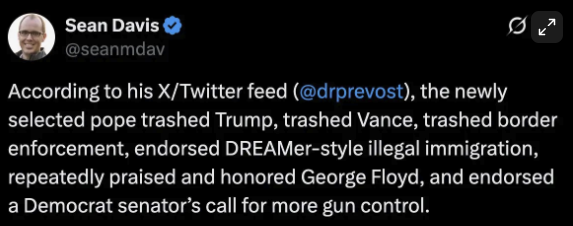
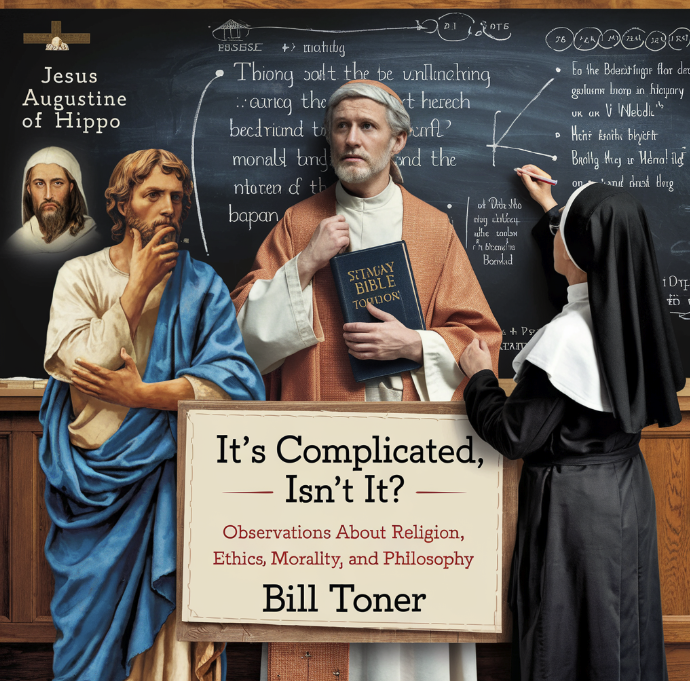
In my upcoming book “It’s Complicated, Isn’t It?”, there’s a chapter on Religion and Politics where I delve into the absurd positions that “Christian Right” Republicans hold on immigrants, trickle-down economics, the social safety net, and guns. With the news of Catholic Cardinals casting their ballots for Cardinal Robert Provost to be the next Pope, the same group of Republicans are losing their minds. Oh great, now we have a “woke” Pope.

Republicans have been faced with the challenge of twisting the messages from the New Testament to fit their caste system for decades now, and the election of Pope Leo XIV is going to make it considerably harder.

Contrast these two points of view.

You love your family, and then you love your neighbor, and then you love your community, and then you love your fellow citizens in your own country, and then, after that, you can focus and prioritize the rest of the world.

— JD Vance (A Catholic) on Fox News

Republicans using gymnastics to twist the message of Love Thy Neighbor is nothing new. We’ve been witnessing Olympic Champion levels of deceit in the halls of Congress for decades, but this is potentially a powder keg of anti-Trump messaging waiting to happen. And I am here for it.

Dan McClellan’s Book Tour Stop in Portland

On Thursday, I attended Dan McClellan’s book signing event at the Duniway Hotel in Portland. If you are unfamiliar with McClellan, he is a biblical scholar with a Ph.D. from the University of Exeter in Theology and Religion and a robust social media following (Twitter, Instagram, et al.). He also co-hosts a podcast called “Data over Dogma” with Dan Beecher.

McClellan is a somewhat controversial figure in religious circles because he frequently and unapologetically discredits religious myths and dogma posited by the far right. He does this very unemotionally and intelligently, presenting irrefutable facts and scholarly research to the conversation. Watching him in action has been both educational and entertaining.

Dan’s new book is titled “The Bible Says So — What We Get Right (and Wrong) about The Bible’s Most Controversial Issues,” The book delves into provocative subjects such as whether or not the Bible is the inspired word of God, its inerrancy, Creation, Slavery, the Trinity, the Virgin Birth, and whether or not the Bible says women need to cover up. True biblical scholars like McClellan add historical, cultural, literary, linguistic, and theological context to the conversation. In doing so, he tries to understand Biblical Texts as their authors, editors, and earliest audiences understood them. From McClellan’s introduction:

Many people approach the Bible as authoritative, maintaining boundaries regarding what it is and isn’t allowed to say. Allowing the Bible to transgress those boundaries can raise doubts regarding deeply held beliefs people don’t want to see subjected to scrutiny. They are not beliefs that people adopt because they’ve been convinced by data or evidence. They’re beliefs that people choose to accept because doing so is required or incentivized within the social identities that are important to them. Sometimes these beliefs are supported by data and sometimes they are not, but what is true of all of them is that they’re not negotiable. I call this type of belief dogma.

McClellan’s presence on social media frequently intersects with people who assert dogmas such as biblical texts as divinely inspired, inerrancy, and univocality. You’d have to read the book to get all the details, but in a nutshell, McClellan rejects these assertions. He asserts that these beliefs arose over time as people contemplated the implications of different approaches to the Bible and constructed perspectives that made the scripture most useful to their structuring of power, values, and boundaries.

Perhaps the most eye-opening takeaway from McClellan’s message is from a linguistics perspective — that the Bible is a collection of texts without inherent meaning. Meaning comes into play when we attempt to interpret the text, so at the end of the day, it’s whatever you make of it based on your own experiences. We are never just extracting pure and unadulterated meaning. We’re continually constructing it ourselves. We end up guessing the original authors’ needs, circumstances, values, and goals. Why? Because the needs, circumstances, values, and goals of authors and editors two thousand years ago are wildly different than those of today.

My interest in these topics stems from the fact that I am writing a book myself, “It’s Complicated, Isn’t It?” For most of my adult life, I’ve been interested in engaging in discussions with others (if it can be done intelligently and unemotionally). It’s a frustrating endeavor because, in the age of social media, you’re more likely to run into people so steeped in misinformation that they instantly refute your point with lies and propaganda. There’s no moment to pause and stop to actually think things over. They just immediately pull out some parrotted talking points as a rebuttal (usually half way through your sentence). I’ve taken on Republicans in debate forums where Biblical quotes are weaponized in many different ways. In the twenty first century social media landscape, I appreciate guys like McClellan who are out there pushing back on misinformation in an educated way.

I briefly met Dr. McClellan at the book signing and later followed up with a question about the origins of ethics and morals. I was delighted to have him confirm one of the basic hypotheses of my book—believing that ethics and morals originated from the Bible is a fallacy. Ancient philosophers contributed more to framing ethics and morals than the Bible. Most early Christian ethics writing was based on Greek philosophy anyway when the Bible was translated from Aramaic to Greek in 200 – 250 BCE.

It feels good to get validated once in a while.

Kamala and Coach, Keeping it Pithy

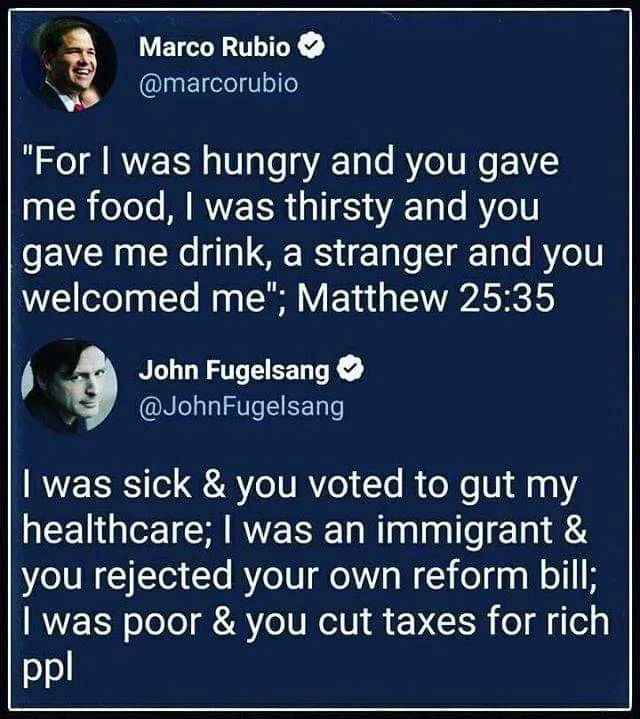
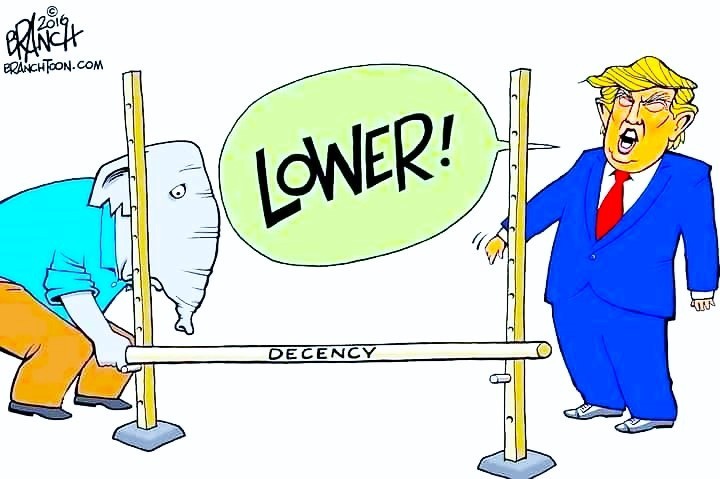
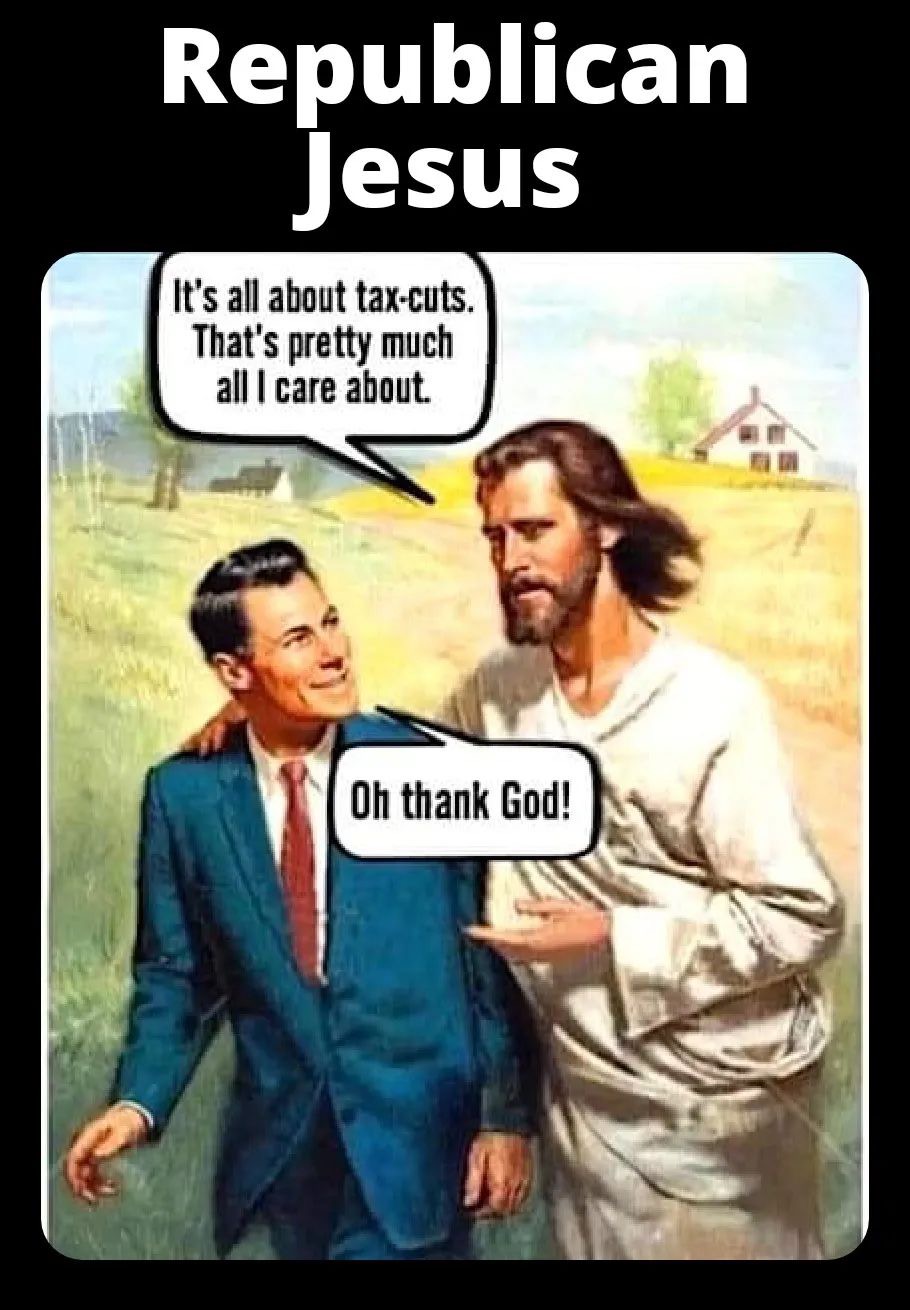
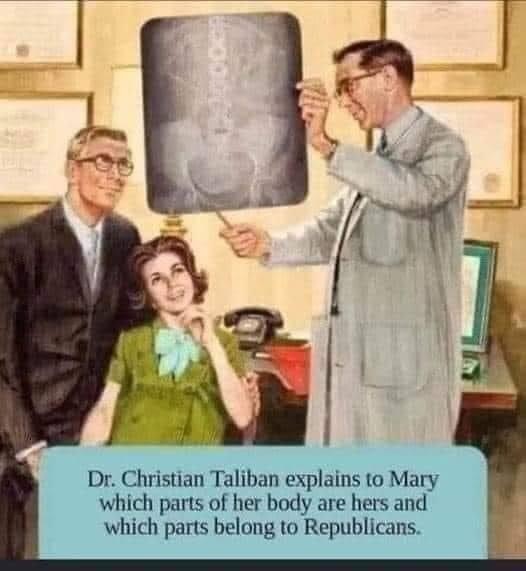
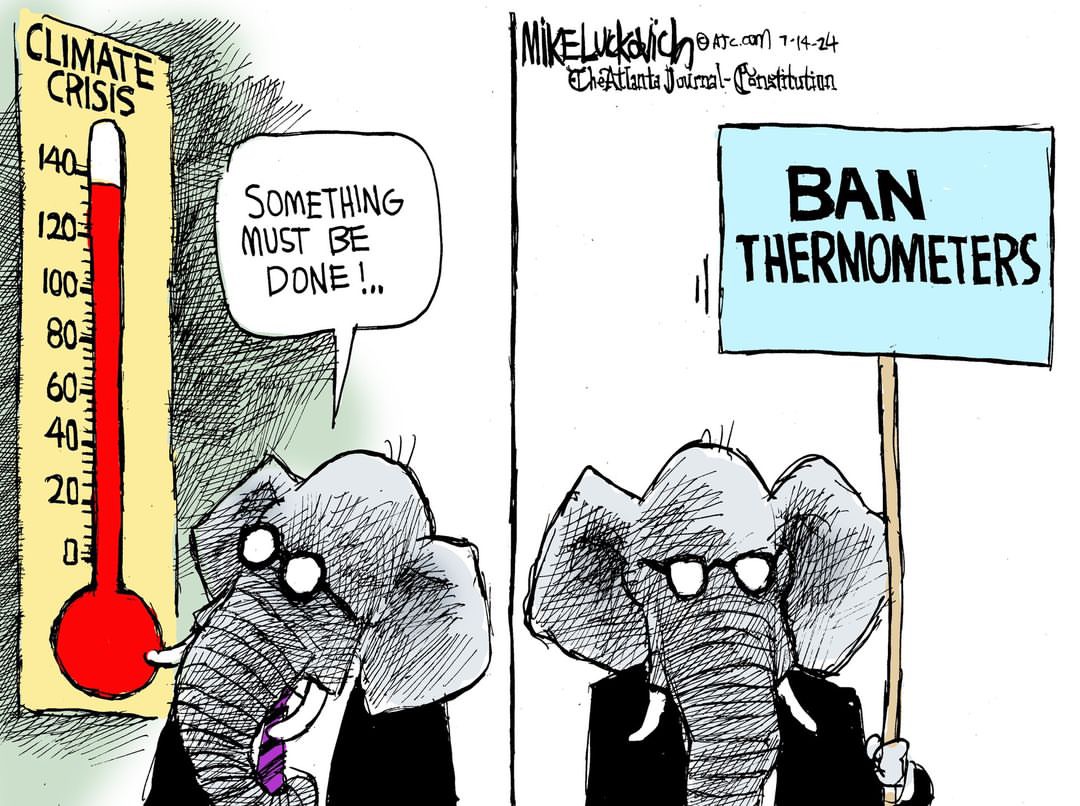
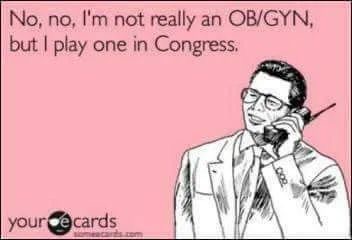
So far the transition from Biden to Harris has gone swimmingly. Record numbers of people are filling stadiums to listen to these great orators wax poetically about the type of future that is possible while giving Orange Jesus some of his own. Recall in 2016 Michelle Obama’s mantra “When they go low, we go high” and how well that didn’t work out for democrats. That’s because Trump is a different kind of animal. You gotta get down in the mud with him, but without using too many words. Keep it pity. Call republicans weird and tell them to mind their own damn business. Share a cartoon that exposes the stupidity and/or hypocrisy. I’ve been saving up images from social media and now seemed like a good time to share some of the better ones that send the message in the strongest possible way.

God in the classroom

(Soapbox to the Tualatin Times many moons ago)

A wise man once said, “Be careful about what you wish for, it could come true.” A recent letter to the editor “God needed in school more than a survey” suggests that our kids would be better off if only we could revert to the days when God was ever-present in our classrooms.

Of course, the first question is, which God? God as in the Jewish God of Abraham? God as in the trinity, Father, Son, and Holy Ghost? God as described by the prophet Joseph Smith? The “Jehovah” I’ve read about in The WatchTower? Allah as experienced by the prophet Mohammed?

In her best selling book, A History of God, respected historian and former Catholic nun Karen Armstrong talks about how man’s idea of God has evolved from a pluralistic form to the modern-day monotheistic God at the time of Abraham and Jacob. Jacob, ever a pragmatist, cut a deal with the God “El”. In exchange for much-needed protection, Jacob agreed to worship El as the one and only God that mattered. Is this the God we’re talking about?

We have a cross-section of all of these belief systems right here in Tualatin. Surely someone who would suggest God be re-instated back into the classroom would want to be inclusive of their neighbor’s belief system.   How do we do this? About the closest I’ve seen to a common denominator is the term Higher Power, but I suspect few would be satisfied with this watered-down description of God.

Since the very definition of God it is a hard question, I’m in favor of using a little class time to explore what each of us means when we say the word, God. In fact, while we’re at it let’s expose our kids to the concepts behind a variety of belief systems so they can make an informed choice.

There would be many benefits to a comparative religion study in public classrooms. Jews, Muslims and Christians might gain an appreciation for each other’s point of view and stop killing each other.

Kids would get the opportunity to do some critical thinking as they form their own belief system. As a parent of 3 kids, above all else, I value giving my kids honest answers to their questions. They’ve come up with some whoppers over the years that are tough for me to deal with because I have more questions than answers myself. If God set up the universe as an experiment, and then gave us free will so he could then reward the faithful, couldn’t he have chosen an experiment that didn’t include so much human suffering?   If God is all-powerful and all-knowing, then he has both the knowledge that there will be suffering and the power to prevent it but chooses not to. Why is this? Eve takes a bite of the forbidden fruit and the price imposed by God is a human sacrifice? Sounds like sort of a vindictive God to me. Are you sure this whole thing isn’t just a cruel joke to get me to behave the way you want?

Talking serpents, plural marriage, child sacrifices, Jonah inside the belly of a whale for 3 days and living to tell about it? Virgin births, rising from the dead, purgatory, life beyond the grave, cannibalistic themes like “eat his body, drink his blood”? The salacious story of Sodom and Gomorrah. I’m having a hard time telling the difference between the Old Testament, a Stephen King novel, and Greek mythology.

Should the knowledge of the 1st century be considered the infallible truth of the 21st? Didn’t Nicolas Copernicus teach us anything about questioning the puerile beliefs of our time?

I see it as a dangerous practice to ascribe literal truth to a compendium of writings drafted over many centuries by scores of different authors with vastly different agendas and perspectives. I find it ironic that those who hold that God belongs in the classroom are usually the same people trying to keep Harry Potter out of the school library.

It’s clear a lot of good has occurred in this world due by people who have a strong faith in God. Unfortunately, history also has recorded the atrocities of The Crusades, the Israeli Palestinian conflict, the IRA in Northern Ireland, and Al Qaeda to name a few, all in the name of God.

When kids ask hard questions about God, instead of giving the usual hand wave answers (my favorite eye-roller is “God didn’t want us to be robots so he gave us free will”), sometimes I find the best answer I can come up with is “That’s a great question but a tough question, so I won’t pretend to have the answer for you at this time.”   Being a parent does not somehow make me an authority figure on God. But I do get to decide if my approach will be rationalism, which seeks to reach the heart through the head, or theology, which seeks to reach the head through the heart.

Whether we like to admit it or not, most of us inherited our belief system from our families. We did no study of belief systems followed by the process of making an objective choice. Someone we trusted made that choice, and in many cases, at infancy. Growing up we were allowed to ask a few questions, but as the questions got harder to answer, instead of admitting they don’t really know, the people responsible for our faith development fell back on that age-old tactic that gets ‘em every time: Fear of eternal damnation.

When you’re an impressionable grade-schooler, the idea of eternity in a place like hell is a tough thing to get past. Perhaps this is why many children just adopt the belief system that’s been browbeaten into their psyche and move on.

I admire many people who have a strong faith in God, especially those who walk the talk. But it’s been my observation that those in favor of re-instating God back in public schools are the same ones who would be marching down to the principal’s office if teachers were to engage kids in a conversation about God and find out the teacher’s definition of God doesn’t match theirs precisely. Perhaps this is why public schools avoid the issue altogether. They can’t win no matter what they do.

In any case, spending classroom time on the subject of God is fine by me.

The Political Jesus

I mentioned in a previous post that I had signed up for a 2 day seminar on The Political Jesus, which was held November 10th and 11th.  An article in The Times piqued my interest and after checking it out a little bit, I figured it might be an interesting endeavor.

Motivation

Since on a good day, this blog has about 3 followers, and I’d guess over half my Facebook friends are pretty sick of my political posts and have me on ignore, one might wonder why I bother.  Well, sometimes I do too.  But I think the answer is, it’s really for me, not you.  I do this for myself because it’s a part of who I am.  Given my knowledge in this area (hint: about as dumb as it gets) I do not seek to preach about anything.  Far from it.  I simply find it interesting.  I have an innate curiosity.  If you do as well, feel free to read on.  If not, by all means go do something else.

There’s a fair amount of evidence in this blog and on Facebook that suggest I may have an ax to grind with Republicans.  Okay, I’ll own that one.  The same is not true of Christians however.  I have no ax to grind with anyone’s faith practice.  We may differ on what works for us as that’s a very personal, individual, and experiential thing.   But I like to think I’m open-minded enough to not scoff at the way in which people practice a faith.  As far as I’m concerned, knock yourself out.  There might be one exception to this.  I’ll admit to frustration with those who are quick to espouse strong opinions combined with being not very well-informed.  I’ve run into a few people like that, but the majority of people I know and love are intelligent people doing what feels right for them, and I couldn’t be happier about that.

It’s necessary to point this out as this particular seminar combines the two things you’re not supposed to bring up at a dinner party: politics and religion.

Influences

I think everyone runs into a few people in their life who are highly influential.  Impact players is how I think of them.  Sometimes I make a list of the top 5 people who have influenced my life in one way or another.  It’s an interesting exercise.  The same can be true of authors/books.  Sometimes you read something that gives you that aha moment that lasts.  Two of mine are David Aldrich – author of www.snohomishobserver.com, and Karen Armstrong – author of “A History of God

It was hard not to be in awe of just how brilliant Dave was.  We used to have a weekly breakfast with a group of guys for the sole purpose of discussing the things you’re not supposed to talk about in a social settings: religion and politics.  Absolutely fascinating.

Dave was a modern-day social justice warrior in every sense of the word.  He led protests, blogged in favor of the little guy, and questioned authority at every turn.  He paid a pretty steep price at times for living by his ideals.  He had been at times, very successful in business, but more often than not, his insistence in standing by his principles cost him in the private sector.   At a young age he was ousted from Pemco for attempting to organize a union.  He believed it was the right thing to do and did until his dying day.  But he didn’t care about being rich.  He cared about doing the right thing.  He was a rare breed.

A History of God gave me an appreciation of highly educated people who have done deep dives on the subject of religion in attempts to tie it all together.  Judaism, Christianity, and Islam have a common denominator – each faith traces its roots back to Abraham.

Admittedly, much of what Armstrong writes is over my head.  I concluded her target audience must be mostly other well-educated historians.  But I definitely had some useful takeaways.

As an example, when everything is put into the context of a timeline, it’s interesting to find out that as a people, we humans transitioned back and forth a few times between the notion of God in the plural form to monotheism up until about 680 CE.  I grew up thinking that pretty much monotheism was settled matter except for maybe during the time of cavemen.

Additionally Armstrong challenges us to go through the exercise of reconciling our religious and political beliefs.  Trust me, this is not an easy exercise, but it’s a worthy one.

Speaking of timelines, one other thing I hadn’t considered until reading Armstrong – the books of the bible were written by a collection of authors between 800 BC and 110 CE.  That’s 910 years.  So there are numerous books that make up what people refer to as “the infallible word of God” written by dozens of authors with vastly different perspectives and agendas.  I’ve always felt that explains a lot.  I’m 57 years old and the world is a lot different now that it was in 1960.  910 years is an incredibly long time.   It then becomes incumbent upon me to put this little factoid into perspective as I move ahead with everything else I learn.

The Presenters

Reading the bios of the presenters intrigued me as I had already discovered that as a self-professed dumb person, it’s interesting to hang out with intelligent people when you can.

The detailed bios of Arthur J. Dewey and Celine Little can be seen here.

Just having a Ph.D. doesn’t make you always right.  I get that.  One has to be careful about the sources of information we choose to learn from.  It’s a good idea to try to sniff out any underlying motivation someone might have for the particular message they are sending.  Is it financial?  Is it to try to recruit?  Is it to espouse conspiracy theories and gain followers?  Why are you here anyway?

I was pretty happy with the end result in that the whole time I felt like both presenters were in the education business.  Both had written books and yes, they were for sale but less than $20.

Admittedly there were times when I was a little lost just because I’m not familiar enough with the players in history to keep up with the story.  But you gotta start somewhere.

Context is Important

We spent Friday night learning about the social and economic context of the early followers of Jesus from the first century.   Enter: The Roman Empire.

A full discussion on the Roman Empire in the early centuries CE is both out of scope for a blog post and also, beyond my ability to articulate anything insightful because I honestly don’t know anything insightful.  It’s not been a strong area of study for me at any point in my academic career.  But I can share a few takeaways.  Here’s what I learned:

  • The Roman Empire was a brutal regime
    • If you’ve seen Gladiator or The Borgias, which would have been several centuries later, you would have an understanding of how brutal the Emperors were in constructing the Roman Empire.
  • The Jewish-Roman War of 66 – 70 CE was particularly brutal
    • Over 1M people killed.  100,000 enslaved.
    • To the victors belong the spoils.
      • The Roman Colosseum was one artifact built with the spoils 70 – 80 CE
    • Public humiliation was a big part of it, even after the war was over
      • Coins that depicted Romans as the masters and Jews as the slaves
  • These facts are important for centuries later to give context to the intense anger between the Romans and the Jews

Dyadics and the Social Pyramid

In the graphic below, the top-tier of Senators and Administrators represents 5% of the population.  The Nobles, Patricians and wealthy Plebeians represent 10%.  The remaining 85% of the population are what Dewey referred to as the Dyadic’s – lesser human beings in more of a servitude role.  A simpler way to think of it is, the top 15% considered themselves worthy of the gifts they received.  The bottom 85% were there to serve the top 15% – or else.
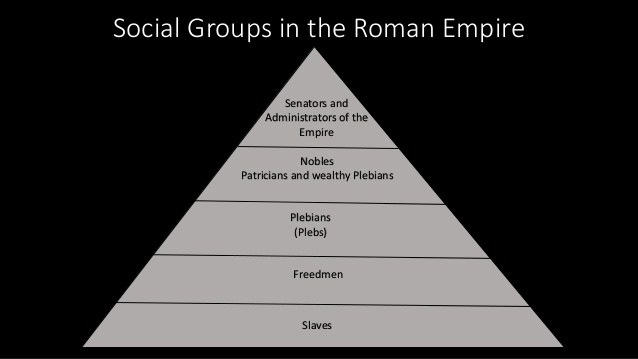
ancient-rome-hierarchy-3-638

Additionally the Dyadic’s in general had the following characteristics

  • My identity is found in others’ eyes
  • My social group defines me
  • Change requires going beyond my means
  • If one does attempt to change out of this group, they are labeled
  • To venture out of the Dyadic group with your thought process is rebellion

Lastly, for the pyramid scheme to hold, the bottom 85% needed to believe they belonged there.  The upper echelon addressed this issue though (in large part), fear.

There are artifacts that when closely studied by historians depict the notion that the culture of the Roman Empire was such that the closer you were to the top of the social pyramid, the closer you were to God.   If you were a slave, by definition you were out of favor with God.  This is important for later when the subject of resistance comes into play.

Early Resistance

Now that we have a little bit of context around the timeline and the relationship between the Romans and the Jews, it’ll make more sense to discuss the life of Jesus, the agitator in chief.

First of all, as we all know from history, Jesus was a Jew.  Right off the bat he’s not in good standing with the Roman Empire.

There are many examples of Jesus’ controversial teachings throughout the many books of the Bible that illustrate why he might be out of favor with Rome, so I won’t reiterate what you probably already know.  The short version is, the message that there was a greater kingdom than Rome, and that God would provide for its poorest members (which was completely counter to the thought process espoused by the Roman Empire), were offenses that were by themselves punishable by death.  To top it off, his disciples made the claim that he was the son of God.  This was the final straw that put the issue on the table for Pilot to have to deal with.   Nothing will threaten the existence of the Roman Empire, period.

The teachings of Jesus by themselves were the earliest form of Christian resistance.  Much of what he did were subtle attempts to stick it to the Empire in one way or another.  The important part is, he did it by messing with peoples’ heads.  Teaching the Dyadics to reach outside their comfort zone and think in completely different terms.

The Crucifixion

As mentioned earlier, the Roman Empire dealt with its threats through intimidation and fear.  They were not the original inventors of crucifixion (the Persians and Macedonians practiced it before the Romans did), yet they perfected it.

Tens of thousands of people were crucified by the Roman Empire.  Dewey described it as “the ultimate act of being shamed into oblivion.”  An important piece of this message is that not only were you subject to a horrific death – sometimes it took multiple days for death to actually occur – you were also subject to being forgotten.  This was part of the deal.  It was also punishable by the empire to talk about or otherwise make martyrs of anyone who was crucified.  This is important later on when the narrative is around resistance by Christians of the late first, and early second centuries.

Also worth noting with respect to being forgotten into oblivion, Dewey mentioned that there are only 2 known artifacts in history that depict the crucifixion before 400 CE.  That’s a full 370 years after the death of Jesus.

That seems incredibly odd to me and suggests that the fear tactics of the Romans to obliterate the existence of those crucified out of the memories of everyone were in part successful.

In the mean time, the books of the New Testament were written as well as many others, so obviously he was not forgotten.

Controversial Assertion

One problem with going back over 2,000 years in time is that there’s not a lot of hard evidence to support some of the assertions that were made.

According to Dewey, it’s not clear that Jesus ever predicted his own death.  This claim is asserted in the gospel of Mark (approx. 70 CE, or about 40 years after Jesus’ death).

The Next Wave of Resistance

As mentioned earlier, the Jewish-Roman War from 66 – 70 CE was particularly brutal.  Putting this time period into perspective, it was about 40 years after the death of Jesus.  If my limited understanding is correct, the last books included in the canonical Bible were completed around 110 CE.

The writers of the Gospels and other New Testament books followed in Jesus’ path of resistance in that they were committed to a storyline that was in absolute defiance of the Roman Empire.

Just the act of remembering someone who was crucified was a poke in the eye. The New Testament authors, some of them martyrs for having taken the ultimate risk in tweaking the beak of the Roman Empire to support the narrative of this incredible man whom they were determined would NOT be forgotten in history, was the ultimate form of resistance.

  • The poor shall inherit the earth.
  • There is a kingdom greater than the Roman Empire
  • Paul even preached an apocalyptic message in his alternative vision

There are many other examples, but these suffice to tell the story of the risks that were taken to keep his memory alive.

The Narrative

Here’s where it gets interesting.  In my mind, 100 years is a long time to evolve a storyline.  As I mentioned earlier, spread that out amongst several different authors with competing agendas and perspectives, and you have to question whether the stories were written as ‘factual documentation’ or a storyline in support of a narrative the authors wanted to achieve.

I had felt as early as the 3rd grade that many of the stories in the Bible should not be taken literally, but rather, the purpose was to illustrate a point. Jonah and the whale comes to mind.

Dewey confirmed this notion with examples of verses that were provably false as actual historical events, yet served a useful purpose of the authors to get their message across.  This tactic of resistance was to get inside the heads of those who held power.  Creating a narrative that threatened that power was effective, and given the inability to put forth any kind of physical fight against the Empire, about the only tool they had.

There are numerous examples of this, but the ones we talked about were the story of the Good Samaritan, and the example of how it would be easier for a rich man to pass through the eye of a needle than to get into the kingdom of heaven (I’m probably misquoting that a bit).  The Good Samaritan example is better because it follows the recognizable pattern of Goldilocks and the 3 bears where the 3rd bowl of porridge was just right.  This pattern of storytelling dates back centuries BC.

Did they make it all up?  No, I don’t think so.  Did they invent a great deal of it?  Probably.

Yet another Controversial Assertion

According to Dewey, “the narrative around the crucifixion is predominantly fiction.”  Doesn’t mean it didn’t happen.  It just means that much of the storyline was invented by the writers to give meaning to the story and rebel against the Roman Empire.  This one will take some chewing on.

Constantine the Great

(Here’s where out of ignorance I have to hand-wave and fast forward a couple of centuries).

It’s called the turning point of Christianity because after literally centuries of persecution of the early Christians, all of a sudden a Roman Empire decides to adopt the religion as the official religion of the Empire.  (Not a lot unlike how the Republicans stole God from the Democrats and courted the Evangelical voters).

In 313 CE, Constantine decriminalized Christian worship.  This is right out of the John Kerry playbook of “I was for the war in Iraq before I was against it.”

In any case, the irony here is off the charts.  The very empire that did everything they could to wipe Jesus off the map is now in charge of the religion.  They stole it.

There’s a ton written about Constantine the Great here.  I won’t bore you with any more of it, other than to point out the historical timeline.

Resistance Today

The question came up, as often does, about Faith vs. Works.  Dewey didn’t waste much time in answering that question.  In short, his answer was the early Christians stressed the importance of “They will know us by our deeds.”   That was what I was hoping to hear.  I get the faith part, but I’ve always felt the actions are more powerful than words or prayers for that matter.

This topic of discussion always reminds me of the various “profiles” of modern-day churches that seem to have more emphasis on one or the other.  Sometimes (and I’d say the Catholic church is a prime example of this, based on my own experience), there’s mass (no pun intended) confusion about which is more important.  You’ll see lay people, priests, nuns, bishops, cardinals… who have made social justice their main focus through works.  Under the same roof, we have the Bill Donohue’s of the world who seem to have an obsession with the 10 commandments and Catholic doctrine.  I’ve always felt screw doctrine, feed the poor.  That’s an oversimplification, but it illustrates the point.  Additionally, Catholicism includes in its roster Sean Hannity, Hugh Hewiitt, and Bill O’Reilly.  I’d really be interested to know which schools they attended because wherever it was, the entire teaching staff should be terminated.

I have nothing against the message of personal responsibility.  Just ask my kids.  They got the message.  What I have a problem with is the Darwinian approach of survival of the fittest with zero emphasis on compassion.  Exacerbated by the fact that many of the people who lack compassion were born on third base.

I also believe that Faith alone lends itself to the “Frozen Chosen” moniker that is well deserved by many.  I guess I am preaching here a bit.  I should stop.

In any case, I felt somewhat validated in my own practice of exercising resistance to the Trump Empire — and let’s not kid ourselves, that’s what it is.  I also feel like my priorities are in line with action preferred over piousness.  Far from perfect.  But at least I was able to validate my thought pattern isn’t too screwed up.

React v. Respond

So here’s the nut.  Here’s my biggest take away from the 2 day event.  Resistance is good.  Keep doing it.  Shine a light on the Empire, but maybe with a little less reckless abandon. Think things through a little bit before responding and attacking.

A lot of times, my intentions are no different from the early followers.  In a not so subtle way sometimes, I’m ‘trying to get in the heads of the upper echelon, as well as the modern-day dyadics who have drunk the cool-aid so-to-speak.  Remember, for the pyramid of the Empire to work, the lower 85% has to believe in the system.  My mission is to help a few people dis-believe in the Empire.

Twitter will be my biggest challenge.  As Dewey pointed out, Twitter is a contest to see who can get the most re-tweets by coming up with the snarkiest comment. This one will be hard for me because, well, I’m pretty adept at coming up with snark.  I’ve gotten a lot of practice over the years.  My challenge will be to slow it down a bit and think through those responses so that they are not reactionary.

Closing

The point of attending was to learn something from smart people and I feel like I accomplished that, so it was time well spent.  Writing it up helps reinforce the learning as well.  It’s not so much for anyone who might read this as it is a gift to myself.

I don’t feel like I practice enough “works” to be able call myself a social justice warrior, but it would be nice to have time to get to that point some day.  Maybe in retirement.  This job is a challenge.  In any case, whether it’s seemingly pointless tweets or blog posts or Facebook posts, I see benefit in continuing to rail against the Empire.  There’s just so much fundamentally wrong with it, it feels like being passive is not an option.  At least for me.

Jesus and Politics

This is a subject that has had my attention for the past 30 years or so.  There came a time in my late 20’s when it was time to reconcile my religious verses political beliefs.  This is not an easy exercise, but I highly recommend it to anyone who feels like they haven’t asked enough questions along the way.  I’ve always held that most of us have inherited our faith systems, which were pretty much assigned to us a birth.  We did no objective research followed by an informed decision.  We were indoctrinated while our brains were still very impressionable.  And that’s fine for a lot of people.  If it works for you, great, but obviously it doesn’t work for everyone or else I wouldn’t be writing this.

I came across this seminar in Beaverton that will be help on Nov. 10/11.  The topic of the two-day event is “The Political Jesus”, hosted by a couple of authors who hold PhD’s in theology (read, a lot smarter than I am), and the topics appear to be around squaring one’s need to be a part of the political resistance with ethical behavior in line with Christianity.

There’s very little doubt that Republicans have masterfully employed Roe v. Wade and guns as wedge issues to capture the fundamentalist vote.  That appears to be the only logical explanation for people voting against their own economic interests and buying into trickle down theory.

But I’m more interested in what’s perceived as the better path;  Activism or blind faith?  I know what the answer is for me today, but I want to hear what some smart people have to say about it.  People who’ve studied it for years and written books about it.  They will have my ear for a couple of days.   It should be interesting.  I will let you know what I find out.


Happy New Year

I’d like to write a really upbeat blog post about the upcoming year, but I just don’t have it in me.  I am sorry.  Apologies ahead of time.

I suppose I can take some comfort in the fact that our system of government is by design a very slow change management system.  It’s nearly impossible to get changes pushed through (witness the last 6 years of Obama’s presidency).

It’s also true that the Executive branch gets too much credit and too much blame for what happens on his/her watch.  An example of this would be that Obama wanted to invest in infrastructure / jobs but the Senate Majority blocked him every step of the way, initially to ensure Obama was a “one term” president, and subsequently, out of spite, they wanted his record to be clear of anything that smacked of an accomplishment.  It worked.  Ironically, Trump now wants to invest 1 Trillion into infrastructure and the GOP is split as to how to move forward with this idea.

Even more interesting will be to see what happens with immigration.  Trump campaigned on the radical idea of deporting 12 million illegal immigrants and got support from the rust belt states who are still hurting from globalization / NAFTA.  The majority of people in this country want something constructive done and there are many options on the table from mass deportation to full amnesty.  But here’s a prophecy for you.  Nothing will get done during the next 4 years for the same reason nothing has gotten done for the last 30.  Both parties’ establishment wings benefit from illegal immigration.  Major corporations want the cheap labor.  Progressives want the votes.  For Trump to get his way, he’s have to flip the bird at major corporations and the cynic in me says that’s going to be difficult for him to get through.  Anyone heard anything about the ‘wall’ lately?

Maybe we’ll press on with the status quo for a period, but having lost the White House, Senate, House and soon, the Supreme Court, I suspect change is coming in spades.

Not all of it will be bad.  Should the welfare roles be reviewed every year for fraud?  Yes.  I have no problem with the idea of cutting wasteful spending.  I do however have a problem with blanket cuts or privatization of Social Security and Medicare that hurt Grandma.

Progressives including this writer are in fact guilty as charged of elitism.  I’m guilty of staying mostly in the debate realm on social media and not getting up off my arse to do anything constructive about it.  That will change in 2017.  It’s time to transition from elitist to activist.  On my to-do list is to dig up some sign materials, find the spray paint can and a few staples.

I’ve been watching the country split in half since Bush v. Gore.  I’m learning not to be surprised by the outcomes.  I seriously thought Gore waxed Bush in 3 consecutive debates but alas the voting population felt otherwise.  I was initially skeptical of Reagan’s “trickle down economics” plan and it didn’t take long for me to figure it out.  I remember very specifically getting an extra $35 in my paycheck in the early 1980’s.  Boy did I ever stimulate the Marysville, WA economy with that!   Meanwhile, Reagan’s cronies were ordering new yachts ( to his credit, the yacht building business did boom during those years ).

I was not a supporter of Reagan or Bush, but I didn’t loathe them.  Critical policy differences, yes.  Loathe, no.  Both displayed tolerance for all faiths, minorities, and generally tried to be inclusive as the leader of the free world.

Trump however, cannot seem to go a day without be-clowning himself on Twitter.  I mean, what President Elect in history has stooped to the level of pouring salt on the wounds of his rivals with a faux New Years wish?

So I enter 2017 with a glass half empty I’m afraid.  Just being honest here.  As a very young man in my early 20’s I had my first encounter with a Jehovah’s Witness which resulted in several deep conversations where I learned what they were all about.  In the end I said “No Thanks”, but not before learning much about Armageddon and the End of Times prophecies.  I’ll leave it to your imagination as to why I’m reminded about these events to start off 2017.  There isn’t a day that goes by where I don’t wonder if the Jehovah’s Witnesses aren’t perhaps right.

Finally, I’ve read several articles on the 7 deadly sins as they relate to the ego of Donald Trump and as an exercise, you can Google each of them next to the word Trump and fill up 100’s of pages of results.  Just for my own personal amusement, I’ve done that.

Happy New Year!

-Bill

=========================================================================

  1. Lust
    1.      This is my favorite, with Falwell.   playboy    unadjustednonraw_thumb_23ca
  2. Gluttony
    1. 120719055137-trump-international-course-golfing-full-169
  3.  Greed
    1. Trump’s Views on Greed
  4.  Sloth
    1. chemprtwkaex6or
  5.  Wrath
    1. 160331200050-trump-quote-11-super-169.jpg
  6. Envy:  No A-List Celebs at the Inauguration.  Gee, I wonder why?
    1. 49442915-cached
  7. Pride
    1. An astute article on Trump’s pride issue