Was goofing around on the guitar

Was goofing around on the guitar
I feel like the movie should have been subtitled: Learn to quit while you’re ahead.
The original Woodstock Story made history because it attracted 400,000 people — well above the estimates, featured a long list of breakout bands, sent a message to “The Establishment” to watch us spend 3 days focusing on free love and peace without being uptight about anything (thanks in part to a plentiful supply of marijuana) and got a little crazy after some rain (those crazy kids slid around in the mud and some took their clothes off. Oh my!
Woodstock ’99 made the headlines because it was one of the biggest clusterfuck events in Rock ‘N Roll History. Let me count the ways:
In 1969 Michael Lang was in his early 20’s but managed to get himself a job as one of the promoters having co-organized the Miami Pop Festival where an estimated 25,000 people attended the 2 day event. Lang re-appears in Woodstock ’99, again as a promoter, much older and clearly aloof when it comes to taking any personal responsibility for the failures of the festival. The film documents clearly how event organizers tried to whitewash the multiple disasters as the product of “a few bad apples.” Hardly.
From the looks of it, the event organizers put their energy into figuring out ticket pricing, distribution and how to prevent the free-for-all entry that happened at the original Woodstock festival in 1969. It’s clear they were determined to make a profit this time. Nothing wrong with that but they failed at every other aspect of the event planning and execution.
There was no plan whatsoever to have the kind of infrastructure necessary for a crowd this size, and this time they had a good idea of how many were coming so there’s no excuse. It looks like they hired a vendor to drop off a bunch of port-a-potties, hundreds fewer than what was needed, with no plans to service any of them during the 3 day festival. The predictable happened. Shit piled high everywhere stinking to high heaven.
In their quest to make a profit they enacted a rule that festival goers could not bring in their own water. Bottled water was available from vendors for $4/bottle (price gouging in 1999) and there wasn’t nearly enough of it. The vendors were only too happy to raise the price as the supplies got low, enraging the crowds.
Perhaps the biggest miscalculation was the odd mix of bands they invited to perform. Sheryl Crow along with Limp Bizkit, Korn and Megadeath? Sheryl Crow is one of the greatest singer/songwriters of the last few decades. The other “bands” stood up there and played power chords at high volume while encouraging the crowd to participate in a no holds barred rave at high energy. The band’s purpose was to whip people into a frenzy and if that’s what the organizers wanted, then mission accomplished. The problem is it wasn’t safe for anyone out there. People were legitimately getting hurt. Which brings me to the next notable failure
The organizers saved a ton of money by not hiring any security. In their place they hired “Peace Organizers” who were outnumbered and helpless against a raging crowd.
The biggest miscalculation of all was to arm each festival goer with a candle. The must have envisioned some kind of Kumbaya moment to end the festival. Really? To the Red Hot Chili Peppers? What the got instead was burnt towers, semi trucks and fencing. A pissed off crowd added anything burnable to the conflagration.
Of course part of a Peace and Love festival is going to be about mind altering drug use. It was in 1969 and you could count on no drug sniffing dogs being deployed at Woodstock ’99. The difference is the type of drugs used. Woodstock was about marijuana and maybe some LSD. Woodstock ’99 was about ecstasy and heroin. People were legit having very serious medical problems with virtually no way for an ambulance to gain access.
What struck me the most about the movie was the interviews with Michael Lang. He took absolutely no responsibility for the failures. My impression was he got lucky in 1969 and got elevated to the post of festival guru when in fact he was way over his head from the beginning and shouldn’t have been there in the first place because he didn’t know what he was doing.
The movie had great footage that captured pretty much everything. The interviews were revealing, except for Michael Lang who seemed to oscillate between trying to polish this turd to the best of his ability and pretending to care at all.
References: Woodstock 1969 vs. 1999
(This was an article I wrote in 2007 if memory serves. The Tualatin times afforded me the opportunity to write a piece for their Living Section and this article was featured).
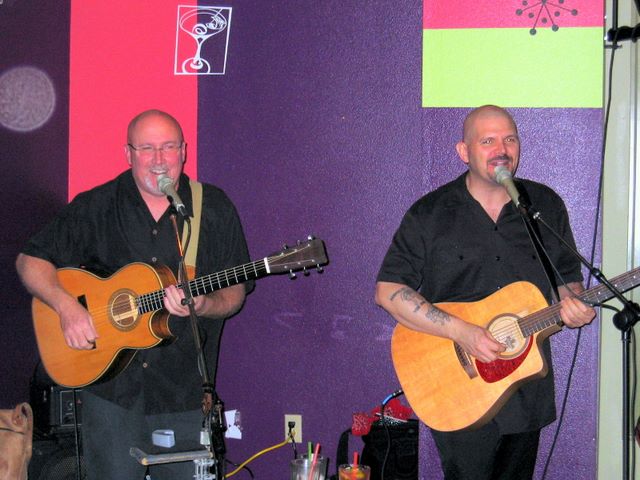
Sometimes a last name isn’t necessary — Elvis, Elton, Jimi, Mick.
Around Tualatin, the phrase “Tim and Jim” is synonymous with local legends Tim Ellis and Jim Walker, who bring their unique style of entertainment to Hayden’s Lakefront Grill Lounge most Friday and Saturday nights.
On the surface, the idea of an acoustic guitar duo in a hotel lounge may not conjure up images of an evening you’ll want to immediately go text your friends about, but Ellis and Walker are anything but your typical lounge lizard act. They have branded their own style of performance.
It would be hard to categorize their eclectic range of material into a single genre. From Irish Folk Ballads to Simon and Garfunkel, Led Zeppelin to The Beatles’ “Helter Skelter”, they’ve got the bases covered. “Versatility has always been important to us” explains Ellis.
What’s different about Ellis and Walker is the improvisational aspect of the performance. “There is no setlist”, said Ellis. “Everything is very dynamic.”
They are likely to start a marathon medley of songs at 7:30pm and not come up for air until 10pm. As if joined at the hip, they execute seamless song transitions with little more than a head nod or a whisper.
“It’s a balanced attack on chaos”, added Walker. If we’re in a particular rhythm, one of us will think of a song that will either maintain the flow or at least be in a similar key.”
Whatever the formula, it appears to be working. The energy coming from the stage is utterly contagious.
In the greater Portland area journeymen, Ellis and Walker need no introduction. Both have well-established careers in the music business. Ellis has shared the stage with ‘A-List’ performers such as Tom Petty, Robben Ford, and Michael MacDonald. Walker has opened for Little Feat, Karla Bonoff, and Boz Scaggs to name a few.
Considered by his peers to be in that elite class of guitar players, Ellis brings incredible musicianship to the stage and will occasionally take the lead singer role.
Walker is the singer/songwriter of the pair and does most of the lead vocals.
Besides the basic ingredients of impressive musicianship and vocals, Ellis and Walker differentiate themselves from the field with their unique arrangements. When going to see Tim and Jim, expect the unexpected.
Halfway through Loggins and Messina’s “You Need a Man”, they may take a hard left into the signature riff of “Smoke on the Water” which completely catches you off guard, and then return to where they left off on “You Need a Man.” Right about the time you’re saying to the person sitting next to you “Now that was cool”, they do it again, only this time with “Stairway to Heaven.”
It completely disrupts any attempt you were having at a conversation because you feel compelled to pay attention for fear of missing what’s coming next.
Customers appreciate the way Ellis and Walker complement each other. Wayne Wischman, a regular at Haydens who estimates he’s seen Tim and Jim 50 times comments, “The chemistry just works and the sound is great. Jim gets to focus on his strong suit – singing, and Tim gets to let loose with free reign on creative guitar solos.”
Scattered throughout the evening they will perform a smattering of Walker’s originals, which in many cases are just as familiar to the regulars as the cover songs.
Walker’s lyrics are full of imagery. Sometimes dark, at times irreverent, and occasionally humorous, his songs succeed at connecting with a feeling or memory, often bringing back that anti-establishment sentiment from the ’60s.
Explains Walker, “I try to put you in a mood when I write. The imagery is to help my songs be like a cool movie you remember. The irreverence comes from childhood experiences and growing up questioning authority.”
Walker is indifferent to commercial success with his songwriting, though singles like “Empty Emily” and “Feet in my Shoes” are crowd favorites at Hayden’s and have done well by word of mouth and exposure on the Internet.
Ellis stands out as an accomplished guitar player in performance but is perhaps better known around Portland as the guy you go to if you want a top studio musician on your CD. As co-owner of Kung Fu Bakery Recording Studio, he’s well-positioned to tap into his strong suit — recording.
Walker notes, “The best thing about working with Tim in the studio is that he can hear a song once and nail the second guitar part on the first or second take. He has a gift for hear it, play it.”
Ellis frequently records and performs with other well known Portland area musicians such as Craig Carothers, Tom Grant, Mary Kadderly, Michael Allen Harrison, and John Nilsen.
While completely content with what they are doing now, Ellis and Walker confess their dream project would be to get involved with “a cool film with a real budget.” Both grew up in Los Angeles and have connections with the movie industry.
For those who have experienced the cozy confines of Hayden’s, it’s easy to understand why the duo’s popularity creates a bit of a challenge for the staff. The lounge is frequently jam-packed from start to finish on Friday and Saturday evenings.
“Our phones start ringing about Wednesday with calls from customers wondering if Tim and Jim will be performing this weekend”, said General Manager Jeff Munden.
For Walker and Ellis, the appeal is the freedom to be creative in a live setting and the free reign owner Bill Hayden gives them. “It’s very collaborative”, said Ellis. “We work with Bill, not for him. Our interests run parallel. We understand the goal is to provide a great experience for customers.”
Munden points out, “The advantage of Hayden’s is that it provides top talent in the suburbs in a smoke-free environment with no cover charge.”
For local residents, let’s face it we’re spoiled. The talent to play much bigger venues exists.
“I’ve never liked being under the microscope” admits Walker. “Somehow hanging out with big names separates you from the people you really want to be close to.”
“I just want to get up every morning and be excited about what’s on the schedule for today”, added Ellis.
For now, Tualatin area residents can take advantage of some extraordinary live music close to home, but it does beg the question from a familiar Billy Joel tune:
“… they sit at the bar and put bread in my jar
And say, man, what are you doin’ here?”
An instrumental take on the Bobby Hebb tune inspired by both Greg Howe and Erick Hailstone.
Amazon puts on an annual conference in Las Vegas called re:Invent. But the conference, which boasts 50,000 engineering geek types is a blog post for another day.
One can only take so much techie talk in a week, no matter how much of a geek we are. In search of some balance for my week, I discovered my calendar was free Wednesday evening so I scanned for some shows on the strip. People who know me well know that I’m a Beatles fan. For me it’s a combination of the Beatles music — which is arguably the best catalog of rock music produced in a decade — and Beatlemania, which is best depicted by videos of screaming girls in the Ed Sullivan Theater.
As luck would have it, the Mirage had a nightly Cirque du Soleil called “Beatles Love” which piqued my interest. The deciding factor was the Mirage was easily walkable – right across the street from where I was staying. This was my very first Cirque du Soleil experience so I was looking forward to it, though I was wishing Donna could have come with me on this trip. She would have really loved it.
Sometimes being a Beatles fan comes at a price. I think I may have found one of a handful of G rated shows in Las Vegas. Secretly I was hoping for PG-13 at least, I mean c’mon, this is Las Vegas!
The first thing I noticed was the intimate nature of the stage. I bought a mid-range priced ticket yet I was in the 2nd row, literally 5 feet from the performers at times. The stage itself is small. I was wondering how they’d navigate the show around such a small space.
For those who haven’t seen it and are wondering, think Woodstock meets Fantasia meets Grease meets Ringling Brothers meets a Stanley Kubrick film. The writers intentionally used Beatles lyrics to tell a story – with dance like you’d see in a musical. Other times with high-flying acrobatics with actors in costume.
The choreography was colorful as you’d expect for a 60’s based show. Blues, reds, yellows, bright greens everywhere. What caught me off guard a little bit was how imaginative it all was. Nothing was too weird costume-wise for “The Beatles — Love” similar to Kubrick’s “A Clockwork Orange”. Case in point, the segment they put together around Ringo’s “Octopus’s Garden.” White octopus ghost like figures, brightly lit, hanging from ropes, and then larger ones that turned out to have humans underneath them getting ready to do some acrobatic moves.
Volkswagen had a noticeable role in the show with multiple VW bugs and vans when it came time to reminisce about Woodstock and the hippie movement.
As you probably guessed, there were high trapeze type acts with ropes, platforms, ladders, and long bungee chords. The athleticism itself is impressive. These are people with about 3-4% body fat. Sometimes in the moment there’s so much going on above you with the acrobatics and straight ahead with the dance choreography that you’re not sure what to focus on.
As an infrastructure geek, I’m continually amazed at the stage design and what it must take to move all those parts and pieces around to fit so perfectly for different segments of the show. Now that would be an interesting engineering project to work on.
The show covered many Beatles favorites so think super imaginative story telling and choreography around Here Comes the Sun, Penny Lane, Twist and Shout, Help!, Blackbird, and Hey Jude. My favorite though was Lucy in the Sky with Diamonds. A female trapeze artist in a white dress with shiny lights on it everywhere soared across the landscape to that song, twisting, turning and doing acrobatic moves that catch you off guard.
I’d recommend the show for families or if you’re super Beatles curious like I am.
About 25 years ago I discovered the wonders of recording music. The equipment was primitive by today’s standards. I think my first recording at Music Man Studios in Wilsonville was done on a 4 Track Boss digital recorder. I had entered a song writing contest and I won an award in the adult group with the original Foolin’ Around
It wasn’t anything spectacular. I had just picked up the guitar again after not touching it much while raising 3 kids for 20 years. But now I was hooked.
Ever since I’ve struggled with the decision of the approach one should take on recording music. Fundamentally, is your source of recording material hardware or software? In the beginning I went with hardware and invested in an 8 track DAW from BOSS that worked pretty well, but I always wondered if that was the right decision.
Since then, the software technology has progressed beyond anything you can imagine. Most professional studios use Pro Tools, which, to the home hobbyist can set you back about $600 or more to invest in. It’s definitely the top of the line. I could never justify the expense there, but I did try to get a free (limited) version of Pro Tools that came with an audio interface box I bought from M-Audio. But that experience sucked the big one. Licensing for the limited version was a hassle, including dongles and everything. Finding drivers to work with the POS M-Audio box proved to be difficult. Hours and hours wasted on this path. All I can say is, don’t do it.
I’ve seen what Pro Tools can do. In fact, I’ve had another original, Invisible Man recorded with Pro Tools, but it wasn’t at home, this was at a studio. Amazing what it can do.
So I’d gotten wind of a relatively free Digital Audio Workstation (DAW) tool called Reaper that was in my price range, tried it out, and it worked pretty well. I made several recording using it and they are on soundcloud. Reaper set me back only $60. Not bad.
Recently I got wind of Pro Logic. For $200, you get the full enchilada. As an Apple user I decided to go all in. It rivals Pro Tools in many ways for 1/3 of the cost. It has options that will take years to learn and master. I’m in the process of doing a couple of recordings on Logic Pro at the moment, which I will release to soundcloud here soon. But this program strikes as the 3 bears of DAW programs. The one that is ‘just right’.
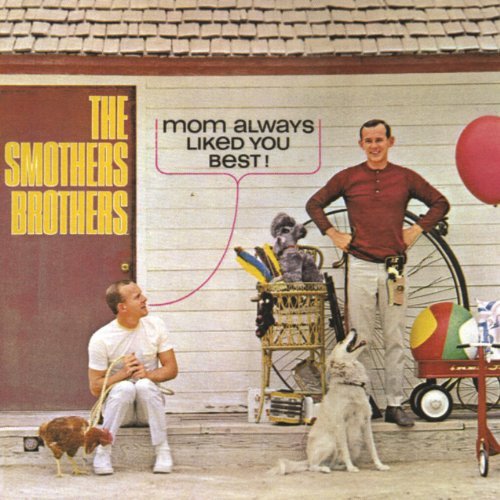
“mom always liked you best” was an LP that influenced me a great deal growing up. I listened to it over a 100 times I’m sure. It’s hard to believe that these guys were the “rebels” of prime time TV in the late 60’s for having the audacity to partake in satire on racism, The President, and The Vietnam War.
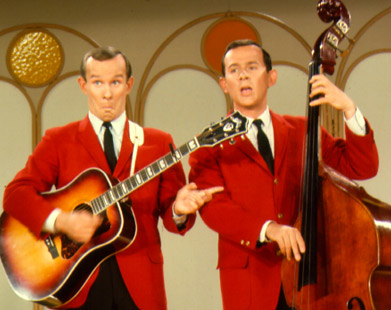
The Smothers Brothers Comedy Hour was a great combination of music and comedy but the brothers had a particular talent for discovering other talent and giving them a chance on their show. Steve Martin, Rob Reiner, Mason Williams to name a few.
From Wikipedia: other guests included George Harrison, Joan Baez, Buffalo Springfield, Cass Elliot, Harry Belafonte, Cream, Donovan, The Doors, Glen Campbell, Janis Ian, Jefferson Airplane, The Happenings, Peter, Paul and Mary, Spanky and Our Gang, Ringo Starr, Steppenwolf, Simon and Garfunkel, The Hollies, The Who and even Pete Seeger were showcased on the show, despite the advertiser-sensitive nature of their music.
David Bianculli wrote a book called Dangerously Funny that is a pretty good account of the struggles between Tom, Dick, and CBS over show content. CBS had to try to balance the brothers’ loyal followers with letters from angry fans who wanted the show censored, and even reported pressure from the White House. Eventually the Smothers Brothers Comedy Hour had to be taped 10 days ahead of time so CBS could review/edit (sensor) content and not long after that the show was cancelled.
Donna and I randomly met a local gal at a party of a friend in Tualatin who dated Tommy Smothers in the late 1960’s. Their first date? Tommy was a presenter at the 1968 Grammy Awards show. She got a back-stage pass to the Grammys as a first date. As the story goes, the relationship didn’t last because old Tom liked to indulge in the hooch a little too much for her tastes.
A few years ago we made a trip to the Chinook Winds casino in Lincoln City to see the Smothers Brothers, well past their prime, but still pretty funny.
Twelve years I toiled in the D leagues of the Portland band scene. I may have gotten up to C level a time or two, but most of it was clearly in the D leagues. Farmers Markets, Private parties, and an occasional corporate event or business opening. I think the most I ever banked from a 3 hour gig was $100. Not bad by some standards. Money-wise that’s as good as some A-B league bands do. But clearly we were operating (intentionally) at the lower levels where mistakes are not a big deal. My goal was usually to get through the night with no quinker-dinkers and I got to the point where I could pull that off more often than not.
I was fortunate enough to ‘play up’ and got to work with some really good mentors who (thankfully) had patience. Along the way you learn some valuable lessons. Here are a few I thought I’d share, for whatever it’s worth.
The singer gets to pick the songs This may seem obvious, but I don’t think it’s often followed.
Travel light You can tell the smart guitar players because they aren’t packing around 500 lbs of shit to every gig. They keep it simple. I watched the best guitar player in Portland show up for a gig one time at Bridgeport Village with The Patrick Lamb Band. He was carrying about 3 things. His guitar on a shoulder strap, a small ( quality ) tube amp, and his pedal was in a bag along with a few cords. That’s it.
Myself, ability-wise about 15 steps down from him, had a habit of showing up for the Annual ZeeRocks corporate gig with my truck loaded to the brim with gear. Let me be the first to admit, the extra gear did not help. And it took an hour to assemble and I was exhausted when I was all done. Worse, I had to remember how to use it all during the gig…. to the point where I’d play the song wrong. You see that’s the point. If you can’t play the song right, then forget about all the other stuff. Priority 1 is learn the song and play it with no mistakes.
Keep the songs moving Some bands/duos do this exceptionally well. Nobody does it better than Tim Ellis and Jim Walker. They can string a medley of 20 songs together without ever stopping. It’s truly amazing. Too often I’ve run into a band member who see a microphone and seizes the opportunity to fulfill his lifelong dream of being a stand up comic. It usually goes over like a lead balloon. Dude, you’re not funny. Another band member couldn’t stop fucking around with the PA and it drove me nuts. It’s like the entire gig was this 3 hour sound check. That messed with my mojo, but you do what you have to to get along. The point is, the listener wants to hear the next song, not your jokes, or a continuation of the sound check, or anything else.
Coming unprepared to practice is rude When one former band member announced that, “Yeah, I gotta go home and woodshed that one” for the 3rd practice in a row, I was ready to SCREAM. By contrast, nothing is better than coming to practice and cruising through new songs and having them sound pretty good the first time. Enough said.
Keep the gear simple ( see also, Travel light ). The more pedals and extra stuff you have to tweak, the more than can go wrong technically and throw your song off. I know this from personal experience. One of the worst flaws I had as a player for most of the time I played was having to tweak my pedals in the middle of a gig. Cardinal sin. All that stuff should be dialed in and operating it should be second nature during a gig. You can observe the good players doing this.
Put your best material in the middle of the set list. I finally learned to do this after realizing it was fallacy to think that you’re going to play a Farmer’s Market and there will be some sort of ‘grand finale’ that you will go out on. Fact is, most people show up to these sorts of events somewhere in the middle, so that’s where you want to put your best stuff.
Don’t take breaks right when you have some momentum going The set list is a guide, not the Bible. Be flexible. If your band has the mojo going and people are getting into it, keep playing. Just because the set list says set 1 is over and it’s time for a break doesn’t mean it’s the law.
Don’t spend a bunch of time in practice re-writing the arrangement Agree to either ‘do it like the record’ so that everyone has the same reference point coming in, or else document the arrangement and give it to everyone beforehand.
Don’t play too loud Better to have people asking you to turn it up than turn it down.
Be flexible with your band mates’ goals It isn’t he 1960’s anymore. Playing with another band is not a form a cheating. The pay is low, so naturally musicians who need the money are going to try to get as many paying gigs as they can. Sometimes the customer wants a duo. Other times they want a full 5 piece. The best musicians I know play in several different configurations… whatever the gig calls for. Give your band mates some room to breath in the area and try not to get your undies in a bunch when a band mate gets an opportunity to play with other musicians.

 View from my PDX Window