Thoughts on… work

Having just switched jobs, I’ve been spending a fair amount of time reflecting on my 39 year career which is pushing the 23 mile mark of this marathon, aka “the wall.”   I’ve been thinking about the highs and the lows, jobs I liked best, the ones I thrived in, the ones I didn’t.  More importantly, why?

I’ve been fortunate to work in the so called “high tech” industry at several companies that had decent pay, benefits, advancement opportunities, awesome co-workers and challenging assignments.  I don’t have too many complaints.  But after this much time and having been around the block on this bicycle more than a few times, I know very well what works for me and what doesn’t.

Just to give you the basic history, it’s been:

  • 12 years at Boeing, mostly as an engineer specializing in Flight Controls software
  • 1.5 years at a Dutch Company (Oce´ Oregon) developing printer software
  • 18 years at Tektronix/Xerox, 3 as a Tools Engineer and 15 as a Manager of a Tools group (Printer division)
  • 7 years at Cambia Healthcare doing Build/Release work, then AWS Cloud DevOps work (Healthcare websites / middleware)
  • 2 weeks at ComScore, a media measurement company doing AWS Cloud DevOps

So the industry exposure has encompassed aerospace, printers, healthcare and now media measurement.  Definitely some interesting assignments along the way.

It’s fairly standard – and I’ve always had – exempt” status at every place I’ve worked.  What that really means is that you can be required to work 60 hours and they only have to pay you for 40.  But it also comes with some flexibility that non exempt employees don’t normally get like flex time and (occasionally) comp time.

The thing about exempt status is that you have to be mindful about work-life balance or else the next thing you know, you’re living the job.  It can take over your life and not in a healthy way.  Having said that it’s fairly standard for people in the business I’m in to work 44+ hours just to show you’re putting in a little extra and not a slacker.

Dr. Katz and Uncertainty

One of the best classes I ever took as an employee of Tektronix was an all day off-site taught by Dr. Ralph Katz based on a book he had just written: The Human Side of Managing Technological Innovation.

A couple of the main points from the class had to do with managing uncertainty with your direct reports, and additionally how positive feedback can be a strong motivator.  Even the little things that amount to positive feedback.  This is backed by data from survey after survey.

Since taking the class I’ve been pretty mindful of management’s ratio of carrot vs. stick.  Dr. Katz went into great detail about successful projects where the leadership had great motivators.  That seems to happen when they can get the employees to buy in to mission and get everyone rowing in the same direction.  When I was in management I tried to keep these points in mind.

Regarding Katz’s emphasis on managing uncertainty, his main point was that uncertainty was bad.  People perform at peak levels when they know what’s ahead.  When you’re in an environment where the company is downsizing and you don’t know if you’re going to be getting a pink slip in the next round of layoffs, it’s hard to be at your highest productivity level.

The thing is, without exception, every company I’ve worked for had downsizing.  Boeing went from 80,000 employees in 1980 to 56,000 employees in 1986.  There had to have been at least 2 rounds of layoffs per year there.  Oce’ shut down after a year and a half and the whole team took severance packages.  Tektronix and Xerox had some strong runs of hiring in the 1990’s, but also several years of painful downsizing.  From 2000-2012 it seemed like a slow, steady leak until the dam finally burst.  Cambia has had a few rounds of RIFs over the years.  Normally pretty small in size, but still, it’s not like the old days when Ward Cleaver used to grab his briefcase, go off to work and pretty much work at the same job for 40 years and never worry about it.

The biggest failing I see in companies right now is that they spend exorbitant amounts of energy explaining “The Company Strategy” because they think that’s a path to get employees’ buy-in to the plan and be productive.  In most cases it’s a huge waste of time.  The reason is because once a company goes beyond about 3 layers of management, I have a harder time relating to the top level strategy issues.  Those aren’t my day to day problems.  The issues in my sphere of influence are very different.  The honest truth is, I really don’t care about the company strategy.  Maybe I should, but I don’t.  When there’s a company meeting at the VP level or beyond, and the Sr. Management Team is talking strategy, people aren’t thinking about questioning it.  What they are thinking is, this all sounds great, but… will there be more layoffs?  Do I get to keep my house?  That’s the uncertainty that’s not managed.

I realize they cannot call out a guarantee to everyone that they will have a job next month.  Very likely they don’t even know that.  But when the layoff cloud is hanging over the campus, 75% of the people who are fretting about getting pink slipped don’t need to be fretting.  And management could address this but they choose not to.

What works

Empowerment

I don’t care if the job is in high tech or not, people normally don’t like to be micromanaged.  I especially don’t.  I’ve had some great managers who got this and I feel like I’ve done some of my best work when left alone for week(s) at a time to go develop something and then deliver it by whatever the deadline is.  I don’t mind intermediate check ins every week or couple of weeks, but basically give me a task and the get out of my way and let me go do it.  Don’t treat me like if left alone, the project for sure will get screwed up.

The product matters

Aerospace had its downside at times but for sure the systems I worked on were interesting.  Flight Controls especially.  I can’t get on an airplane anymore without thinking about what all is going on with the black boxes that control the wing surfaces, the hydraulics, the fail-over systems which are dual and triple redundant, the fault reporting.  All of it.  I found it fascinating.  I also found printers and printer interpreters to be fairly interesting.  The architecture isn’t rocket science, but it’s very complex in many ways to get those dots of ink to find the right spot on a piece of moving paper.  Conversely I have to say, I did not find healthcare the least bit interesting.  I never completely understood why we had scores of development teams and the only website I was keenly aware of was regence.com.  Come to find out there’s a ton of big data processing and you have to have sites for providers and customers, etc.  It’s extremely complex for sure.  I never took the time to really understand the business because I found it boring.  Like, really boring.  I think the product does matter.

Once the engineering work was completed on the 767, Boeing held a “first flight” event at Paine Field in Everett.  When you get to watch your product take off on a flight for the first time, there’s a lot of pride in that.  (As a side note, the landing gear never retracted on first flight — oops.  Other than that, it went well).

Work life balance

I’ve always been willing to put in extra hours .. to a point.  This is just Health 101.  I’ve never worked at one of the really cutthroat places where it’s so competitive that practically every is putting in 60+ hours per week (Amazon, Microsoft, Google come to mind), but my sense of humor about extra hours goes south if it becomes expected behavior.  Sure, give me a project and a deadline.  I’ll get you there.  But if it’s a short stroke deadline don’t expect that I’m going to pull a rabbit out of my ass every time to meet your unrealistic deadline.  Stuff happens in business, sure.  Sometimes you gotta do it.  But not every time.

A Collaborative Work Environment

I’ve never been tempted to work at these startups where they put ping-pong tables everywhere and it’s hard to tell the difference between work and a country club.  Most of those places were short-lived.  I’m not there to play games, I’m there to work.  But I do really think it’s important to have a highly collaborative work environment.  Come to think of it, all of the companies I’ve worked have had this.  Some better than others, but overall I’ve worked with some exceptional engineers and learned a ton, and in most cases people have been very agreeable about mentoring new starts and helping others outside of their normal area of responsibility.

Positive Strokes

I’ve had a few situations where the sign that says “The beatings will continue until morale improves” rang a little too true.  I understand about accountability, but you have to balance that with positive strokes too or else it gets to be an emotional drain.

What doesn’t work

Micromanagement

The opposite of empowerment, the micromanager feels like he/she needs to be in on all the details of what I’m working on and wants a daily status.  I’ve even had multiple status checks within the same day.  The problem is, there’s a psychological aspect to this. Micromanagement has the opposite effect on my productivity that they are after.  When I’m empowered, I work extra because I take pride in delivering. They get extra hours from my exempt status.  If the manager is checking in on me every 15 minutes then at 5 o’clock I go log off. I’m done!

Meetings and Interruptions

Most jobs I’ve had I found myself splitting time between helping users and doing development work.  I enjoy both but the latter requires blocks of uninterrupted time.  Don’t talk to me out of one side of your mouth and tell me how important the project is and then schedule me for an endless list of bullshit meetings that I’m not needed in.  Your job is to make sure I get those blocks of uninterrupted time and if you screw that up, chances are your deadline is in jeopardy.  Project work takes concentration.  Many times it requires deep thought.  It’s frustrating to get started on your project and get your mind settled into deep thought only to be pinged unnecessarily for that TPS report.  Okay, here’s your TPS report, but now it’s going to take me 20 minutes to get back to where I was.  I’ve lost all my shells.  Some have timed out and had aliases defined.  I have to encounter all the overhead it took me to get to where I was before I was so rudely interrupted.  Not cool.

Extreme Multi Tasking

Every job I’ve had has required some level of multi tasking.  It’s pretty much a given.  It’d be great to be on a project and work only on that project, but it’s rarely the case.   But here’s the bottom line.  I can either do 3 things for you and do them pretty well, or I can take on 10 things and do them all poorly.  That is just a fact.  You decide.  So think carefully about putting me on that extra project for “political reasons — to take their excuses away” and consequently add 4 extra meetings a week to my calendar.

The Leash is too Short

Another way of describing the dreaded “on-call” assignment.  I hate on-call.  Hate it.  I understand why a business can sometimes require it, but that doesn’t make me deal with it any better.  Having to always worry about where your phone is 24/7 in case someone might call with an urgent issue really blows chips.  If you accidentally leave your phone in the kitchen and go outside and mow the lawn and then realize you’ve been away from it for a 1/2 hour — that’s a little concerning because they keep track if you’ve responded in the 15 minute required time frame.  There’s additional stress about keeping the phone charged at all times and the ring volume high enough for fear of missing a call. There are potential career consequences for missing a call. What if I’m grocery shopping, have a cart half full and the phone rings from work? Plan on leaving the cart where it is and heading home. When planning your social calendar, figured on keeping all meaningful events off of it for that week.

I found it nerve racking, annoying, and no way to live if there are choices out there.

The Bottom Line

Life is short.  I have some friends I play Fantasy Baseball with and a few of them work in sports related jobs.  One of them is a ticket coordinator for Oregon State and gets to travel with the sports teams.  I remember when he came back after 14 days in Omaha. OSU’s baseball team had just won its third College World Series, which was a real nail biter as I recall from watching it on TV.  His quote was “I’ll take life experiences over money EVERY TIME!”  He’s right.

2018 – A New Chapter Begins

Probably a lot of things happened in 2018, but I can only remember from about July onward.  That was the day that, like Dudley Moore in the movie ’10’ waking up to the sound of Mexican trumpets blaring outside his window, I had an epiphany.  This plan of buying a pied-à-terre downtown was all wrong.  My head leaped up three feet and much to Donna’s surprise I said:

“I’m ready.  I’m ready to sell this house.”

“Wha?”

“I’m ready to sell the house.”

“Okay, give me a minute.”

We had just been furniture shopping for our eventual property addition of a condo downtown.  I think the prospect of adding more furniture to our list of possessions got me to thinking seriously about what we were signing up for.

My original reason for moving to Tualatin had to do with trying to get into a top school district.  Problem is, my youngest graduated 12 years ago.  I no longer have kids going to school in the district.  That reason no longer holds.

There were other reasons to stay.  Great neighbors.  The house was an excellent place to host functions which we did with some frequency.   Tualatin has great parks.  The downside is it’s a long ways to downtown for work and we have a few years left — at least.

So I won’t bore you with all of the details of the move but here’s the summary.

  • Three house transaction.  Donna’s rental, my house + new house
  • Of course we found the home we really wanted before either of our houses had sold.  In fact, it took several weeks before my house was presentable enough to even be up for sale.
  • Donna’s house closed in September
  • Our new home closed in October
  • My house closed at the end of November

It worked out almost perfectly, but not without some drama along the way.  Our realtor, normally a cool, calm and collected character once asserted “You guys are risk takers!”   In retrospect, he had a good point.  Regrets?  Nope.  This time the chips fell our way.

In a move this size everyone has a role.  Mine was head sherpa.  Donna’s was head box packer and painter.  By the end of October we were two exhausted souls.   We had some very timely help from my children who always seemed to come lend a hand at the perfect time.  And these were not easy assignments.   Really heavy stuff being packed out of the attic and basement.

For that help we are very, very grateful.  Thank-you kids and grandkids, one and all.

Our new (to us) place is a 1950’s ranch style home but it has a basement.   The previous owners did a great job of keeping the upstairs updated (the master shower is luxurious) but the garage and downstairs, not so much.  We’ve come up with the term “our 25% fixer-upper.”   In addition, it was a downsize move for us.  Not by a lot, but still.  Several truckloads to the Salvation Army.

After we moved in we realized 3 of the 4 doors to the house didn’t work.  However, they had installed an extremely high-tech chicken coop with solar panels in the back that worked perfectly.  Go figure.  Priorities I guess.

The house sits on close to .5 acres and is ideal for someone who is into gardening (hint, not me).  We’ve had our hands full getting some of the new projects going but it’s progressing along and we’re moving forward and not looking back.  Donna loves her new commute.  15 minutes into work.   We’re also two blocks from Lewis and Clark College so we get a lot of hipsters skate-boarding by the house in ski caps.

The place often reminds me of my younger years.  I always had wood stoves back then and this place has one so I find myself grabbing the old axe and making a trip out to the woodpile to fetch some firewood.  The garage remodel alone will keep me busy for 6 months.  At the moment I’m tearing out brown paneling, green carpet, baseboard heaters and having garage doors installed (not one, but two — front and back).

Oh, and we have leaves and fruit trees.  But lots and lots of leaves.

I would be extremely remiss if I didn’t mention the wonderful news that we are about to welcome not one, but TWO new family members in 2019.  In fact, within a week of each other I learned that Emily and Ari are both expecting.  I believe the due-dates are in the May/June timeframe.

This will double the grandchild count and boy are we looking forward to that!  We have a swing set out back and grandpa’s going to have a tractor so come on over and play on the farm.

I am reminded that we were very privileged to host two final gatherings at the Meier Drive house.  The first was a Fritts/Hellier family reunion in July which was so memorable mainly because people who hadn’t seen each other in decades got a chance to connect.  I met all of Donna’s relatives who could make it and some are now my most frequent “like”ers on my non-stop barrage of #resist political posts.  We see eye-to-eye, me and these #NeverTrumpers.  Oh and we had music on display.  There is music in the family bloodline that is for certain.

Finally, we had one last hurrah at Meier drive with my side of the family when we hosted my sister Donna’s retirement party.  Donna got to retire!  We were so happy we wanted to shout it from the mountaintop — and I think she was too.  It was fun to see the smile on her face connecting with old friends and family.  A very special day indeed.

I’m sure I’m missing a ton of stuff but as I mentioned at the start, the rest of the year is a complete blur.

Let the new chapter begin.  Both of us are all-in and ready for it.

B&D

Cirque Impressions

Amazon puts on an annual conference in Las Vegas called re:Invent.  But the conference, which boasts 50,000 engineering geek types is a blog post for another day.

One can only take so much techie talk in a week, no matter how much of a geek we are.  In search of some balance for my week, I discovered my calendar was free Wednesday evening so I scanned for some shows on the strip.  People who know me well know that I’m a Beatles fan.  For me it’s a combination of the Beatles music — which is arguably the best catalog of rock music produced in a decade — and Beatlemania, which is best depicted by videos of screaming girls in the Ed Sullivan Theater.

As luck would have it, the Mirage had a nightly Cirque du Soleil called “Beatles Love” which piqued my interest.  The deciding factor was the Mirage was easily walkable – right across the street from where I was staying.  This was my very first Cirque du Soleil experience so I was looking forward to it, though I was wishing Donna could have come with me on this trip.  She would have really loved it.

Sometimes being a Beatles fan comes at a price.  I think I may have found one of a handful of G rated shows in Las Vegas.  Secretly I was hoping for PG-13 at least, I mean c’mon, this is Las Vegas!

The first thing I noticed was the intimate nature of the stage.  I bought a mid-range priced ticket yet I was in the 2nd row, literally 5 feet from the performers at times.  The stage itself is small.  I was wondering how they’d navigate the show around such a small space.

For those who haven’t seen it and are wondering, think Woodstock meets Fantasia meets Grease meets Ringling Brothers meets a Stanley Kubrick film.  The writers intentionally used Beatles lyrics to tell a story – with dance like you’d see in a musical.  Other times with high-flying acrobatics with actors in costume.

The choreography was colorful as you’d expect for a 60’s based show.  Blues, reds, yellows, bright greens everywhere.  What caught me off guard a little bit was how imaginative it all was.  Nothing was too weird costume-wise for “The Beatles — Love” similar to Kubrick’s “A Clockwork Orange”.  Case in point, the segment they put together around Ringo’s “Octopus’s Garden.”  White octopus ghost like figures, brightly lit, hanging from ropes, and then larger ones that turned out to have humans underneath them getting ready to do some acrobatic moves.

Volkswagen had a noticeable role in the show with multiple VW bugs and vans when it came time to reminisce about Woodstock and the hippie movement.

As you probably guessed, there were high trapeze type acts with ropes, platforms, ladders, and long bungee chords.  The athleticism itself is impressive.  These are people with about 3-4% body fat.  Sometimes in the moment there’s so much going on above you with the acrobatics and straight ahead with the dance choreography that you’re not sure what to focus on.

As an infrastructure geek, I’m continually amazed at the stage design and what it must take to move all those parts and pieces around to fit so perfectly for different segments of the show.  Now that would be an interesting engineering project to work on.

The show covered many Beatles favorites so think super imaginative story telling and choreography around Here Comes the Sun, Penny Lane, Twist and Shout, Help!, Blackbird, and Hey Jude.   My favorite though was Lucy in the Sky with Diamonds.  A female trapeze artist in a white dress with shiny lights on it everywhere soared across the landscape to that song, twisting, turning and doing acrobatic moves that catch you off guard.

I’d recommend the show for families or if you’re super Beatles curious like I am.


Thanks for the memories

It’s just a house.  Or is it?

Facing divorce in 2006 I had a tough decision to make.  Should I let the house that I just recently bought go or find a way to hang on?  It didn’t make any sense for one person to live in 3400 square feet.  But I’m stubborn and I just bought the thing and I really liked it, so I found a way to stay in it.  Was it the best financial decision I ever made?  Nope.  Hindsight clearly says I should have severely downsized and bought back in after the market recovered.  But you can’t time the market and kick yourself for that.

Was it one of the best life decisions I’ve ever made?  You bet.

I cannot count the number of social functions we’ve held at this place.  Memories don’t have a price-tag.  I got remarried in this house.  We’ve hosted Christmas Eve, Thanksgiving, birthdays, family reunions, grandkids overnighters, college football / Duck games (some more memorable than others), several concerts with various band configurations I’ve been in, and quite a few friends gatherings just because.  It’s been truly amazing.  With Donna’s vision, we’ve been able to transform this place into the type of place that is perfect for gatherings.  I don’t regret one second or one penny.   Memories.

In my old neighborhood, you kind of sort of knew who your neighbors were but you didn’t socialize with them much.  In this neighborhood we did – in spades.  Social functions are happening all the time and lifelong friendships have been made.  You can’t put a price tag on that either.

There’s been some tough times too.  I had a stroke in the kitchen in 2013 where I laid on the floor wondering if the spinning would ever stop.  I injured my back doing minor chores and spent the better part of 2 months crawling around it.  Donna and I both saw job changes shortly after we were married in 2010.  We got through the Great Recession in this house – together.

While it’s been a fantastic 25 years in Tualatin, 16 of them on Meier Drive, Donna and I feel like it’s time to downsize a little bit and get a place together that we can call our own.  The original reason for moving to Tualatin had to do with School District.  I haven’t had kids in the school district in over 12 years.  I used to be Vice President of Little League baseball and I felt like I knew everyone in town.  Now I head into town and hardly recognize anyone.  The drive to and from work for Donna is a 5 times a week burden.  Honestly, the hardest part about leaving will be seeing a little bit less of our amazing neighbors who we’ve become close friends with these past few years.  But we’re determined to make it only a little bit less!

So we’re both selling our houses and have our sights set on a new place up near Lewis and Clark College where we plan to make more memories with old friends and new.  A lot more memories!  That’s what it’s all about.

We’re crossing our fingers everything holds together so we land in the new place.  In the mean time, I have a house for sale that if you’re interested, give me a jingle and let’s make a deal!

Here’s the listing: https://www.redfin.com/OR/Tualatin/10555-SW-Meier-Dr-97062/home/26700654

meier-1

ETOPS

My first professional job that didn’t involve cleaning restrooms was at Boeing Commercial Airplane Company. I started in June of 1980, at the tail end of the 757/767 programs. I worked in Everett, Washington initially, and got to participate in the rollout of the very first 767, as well as first flight. Those two events in particular were very memorable.

At the time, for safety reasons there were strict rules about the routes that twin-engine aircraft could fly over.  The 767, being a twin engine aircraft, was not certified to fly to Hawaii for example. The 747 could because it has 4 engines. The 747 can actually lose 3 engines and still takeoff, land, and fly thousands of miles just fine.

I’ve been out of the game for over 2 decades so I’m not current on avionics capability, but I do know that each ‘system’ on commercial aircraft is either dual or triple redundant, meaning, if a system fails, there’s one right behind it to take over including full hydraulics.

Critical systems like the avionics that control the flap/slat electronic unit (FSEU) are triple redundant because the airplane cannot takeoff or land without it.  Less critical systems like the stabilizer/trim unit are dual redundant because a total failure of both systems, while inconvenient for the pilot, would not necessarily translate into a catastrophic event.

A recent trip to Hawaii on a twin-engine 737 is what brought me down this memory lane.  I have to admit feeling a little uneasy about a 6 hour flight, mostly across the Pacific Ocean on a twin engine aircraft.

Before I left Boeing in 1992, they had certified several twin-engine aircraft for trips over ocean waters to places like Europe and Hawaii via a program called Extended Operations, or ETOPS.   If you read the article, ETOPS has to do with extreme safety around the all aspects of the engine.

Internally, Boeing employees referred to ETOPS as “Engines Turn or Passengers Swim.”  Apparently the acronym caught on because I saw reference to it in the Wikipedia article.

I’ve been inside many 747’s but never gotten to take a flight on one and was hoping that maybe the trip to Hawaii would afford me my first exposure to that.  No such luck.  Instead, they created the 737-800 with ETOPS certified engines.  The 737 is not my favorite aircraft to take a trip on.  The seats are tightly spaced, there’s only one aisle and one lav for a large coach section.   I guess I’ll have to book a flight to Singapore or something to get that privilege.


Kennedy

I watched the State of the Union response given by Joseph Kennedy III and thought his remarks scored high from a shared values perspective. But unlike some, I’m not ready to get on the Kennedy 2020 train just yet.

I love the fact that he’s young and has the potential for energizing the youth vote, but my gut tells me Kamala Harris is a better choice.

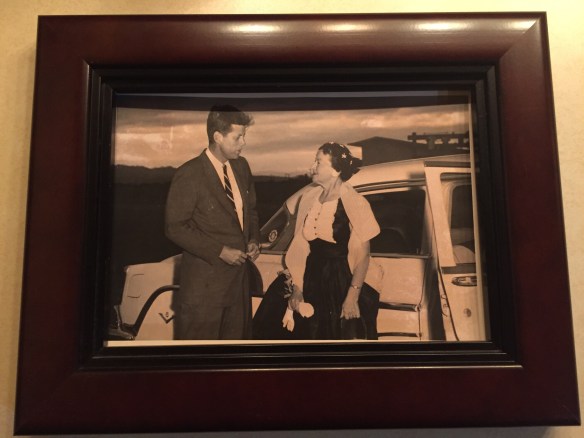
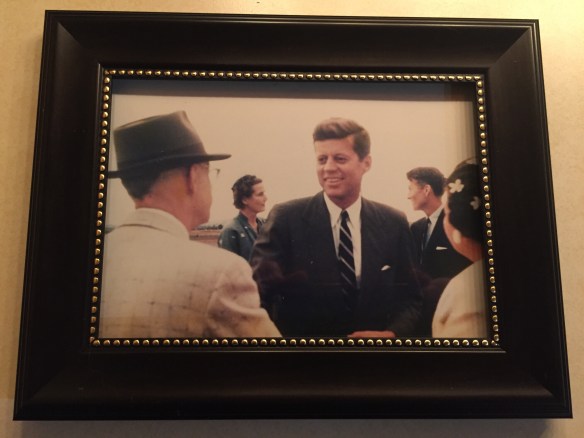
My grandmother, Marcella Toner, held a leadership position in the democratic party in Eugene during the campaign of 1960 and was assigned to meet/greet then senator John F. Kennedy at the Eugene airport during a campaign stop. She was rewarded with a signed Christmas card from president Kennedy after his nail-biter election win in 1961. That Christmas card used to make its way to the mantle over the fireplace every year. Can’t blame them for being proud of that event.

Marcella Toner with senator Kennedy from Massachusetts on the campaign trail in 1960

Grandfather Robert Toner shaking hands with senator Kennedy

But I’m not a supporter of political dynasties. I thought Ted Kennedy served our country well and that’s great, but nobody was more relieved when Jeb Bush dropped out of the race in 2016. Part of the reason Trump won was because people were loathe to keep feeding the Clinton and Bush dynasties.

Joe Kennedy III seems like his grandfather RFK in many ways, and I find that admirable. He has a reputation in the House already as a workhorse. But fair or not, he’ll need to prove over time that he’s not in the position he’s in due his family name.

In the meantime, I continue to be impressed with the intelligence, composure, and commitment to social justice issues of Harris. She’s 53 and a while not seasoned in the Senate for very long, she was the attorney general of California from 2011-2017. She’s impressive on TV. Should she decide to run, I think she’ll have a great chance at the nomination. The time seems right for a youth movement. Biden and Sanders are too old. I’m sure both think they could win in a general election and they are probably right, but their age alone will get in the way of energizing the segment of voters who need to start carrying the torch.

Kennedy is 37. That’s a little too wet behind the ears for some including me at this juncture. Maybe 10 years from now would be about right if he developed a following and convinced enough people he was a worthy candidate apart from his Kennedy bloodline.

In the meantime, I’ll be hoping Ms. Harris has it in her to make a run in 2020.

Don’t give away your power

This blog post is actually about counseling.  In no way am I an expert, but after 12 years as a client, I feel somewhat qualified to make a few  comments on the subject.

I don’t intend to go into my personal life or the personal lives of family members, but I think I can share a few nuggets of wisdom that I learned along the way.

In retrospect I see my divorce in 2008 as a win-win.  She’s met someone who I like a lot and I think is a perfect match for her.  I’ve done the same.  It was really tough but after 27 years we had to face it.  It wasn’t working.  We got married too young.  We are different people at the core.  We’re human and humans make mistakes.  We consider ourselves lucky in that this one turned out pretty good for everyone.

15 years into the marriage we entered counseling.  In the process I feel a little bit like the blind man who had surgery and was suddenly able to see.  There were a few aha moments that changed my life for the better.  For that, I have very grateful.

One of them had to do with people connections.  Not just acquaintances, real people connections.  One day you’re thinking that you’ve got it all going pretty smooth.  Shoot you’re the Vice President of Little League Baseball.  You’re a manager at a high tech company.   Everyone knows you.   Next you realize your life consists of mostly acquaintances where you’re not really connected on a deep level in any way at home or at work.  That one was hard.  Very hard.  Life changing.

Another one was humility.  She was just so gentle with the message too.  I don’t even recall what I was talking about at the time but she interrupted me and asked “Where’s the humility in that?”  In the moment I was taken aback.  I couldn’t answer.  It didn’t make any sense.  I was brought up to see the value in humility and if anything, my parents’ capabilities and intelligence were understated.  Where did I go wrong?  I think I know the answer and it’s not really important to this blog post, but be that as it may, I learned a dose of humility goes a long way and have tried to be a different person ever since.

When someone figures you out at a deep level like this, I think there’s a danger of elevating their words to a level that’s not healthy.  They are just humans too.  They make mistakes.  But somewhere along the way I became more of a disciple than a client.   And in her own way she recognized this and corrected that line of thinking too.

Basically what she said was, “Don’t give me that power.   I don’t know everything.  You don’t need me anymore.  You can do this yourself.  It’s all in here.” And then she put her fist over her heart.

Truth be told, I think I wanted the dependency at the time.  But she was spot on.  It is in there.  We don’t need to give up our power to other people who are the experts.  They are just people.  Sometimes (not always) what we need to do is to dig deep.

Counseling is a tricky business.  I’ve talked to several.  Only 1 or 2 have made a difference so it can be hit and miss.  It’s one of those things where you really have to go with your gut.  I can attest to life changing moments that were worth every penny.  I can also attest to at least a dozen appointments that were a complete waste of time and money.

I can also say that there’s something to be said for just manning up and owning your own stuff and not looking outside for guidance.  You can’t buy your way out of it.  How do I know this?  Because I learned the hard way.

My takeaways?  You can’t take it with you.  People don’t care what titles you hold.  Live in the moment as much as possible.  Enjoy your friends and family while you can.  And don’t get too big of a head on your shoulders.  When we reveal our humanness with our flaws and all, people are actually drawn to that more.

My $.0.2

Penn Station

Penn_trailer_640-resize-400x0-70

I recently ran across an article on the sad state of the Hudson River tunnels that feed into Penn Station in mid town Manhattan. I felt it was alarming enough to be worthy of a quick review.

Here are some statistics and highlights from the article:

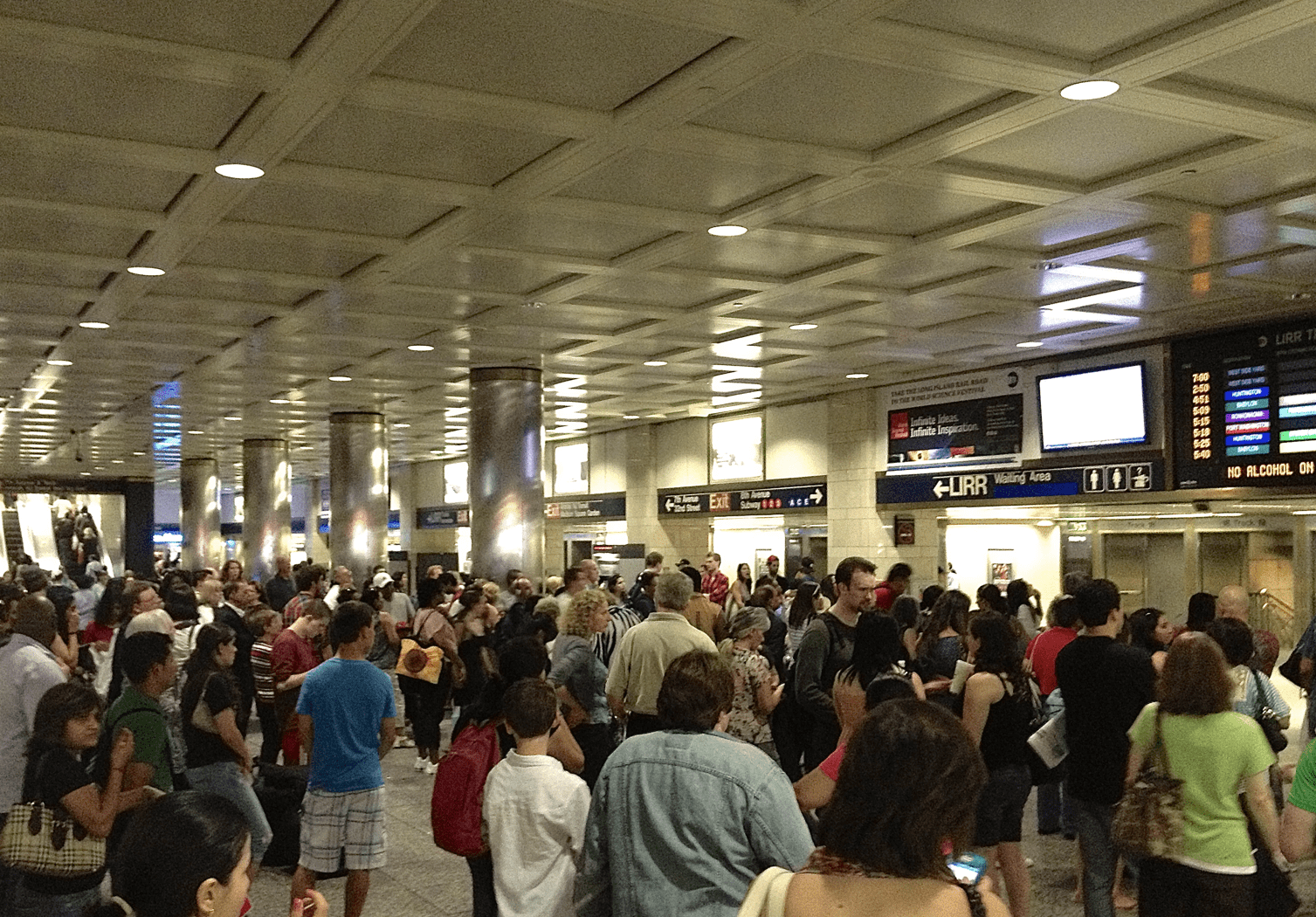
  • Penn Station services 430,000 passengers daily.  More than La Guardia, JFK, and Newark airports combined
  • The route into Penn Station from the south to the north travels through 2 tunnels beneath the Hudson River, both 107 years old
  • More than 200,000 people also use the subway stops that connect to Penn Station.  Amtrak shares the space with the Long Island Railroad and New Jersey Transit.
  • There are more than 1300 arrivals and departures every weekday

Accounts from the article talk about riding in the caboose slowly through the tunnels observing just how bad the walls have decayed to the point of crumbling concrete.  There is visible damage from the aftermath of hurricane Sandy five years ago, where sulfites and chlorides have been eating away at the concrete.

My wife and I have taken Amtrak from New York’s Penn to Boston starting and have seen first hand the volume of people and the bee-hive of activity that place is on any given day.  It’s nuts-o.  Worse than Chicago’s O’Hare on a busy day in terms of chaos.

tt2

As we learned from 9/11, the financial center of the country doesn’t react well to a crisis. Estimates by congress in 2008 projected that any disaster – natural, terrorist or decay of infrastructure that shuts down New York city would impact the U.S. economy by $100 Million per day.  The potential impact on the stock market measures in the Trillions.  The Amtrak into Penn Station is literally the artery of the U.S. Financial system.  A crucial piece of infrastructure that is crumbling as I write this.

There have been a few attempts to do something about Penn Station, but to date all of the efforts have run into unfortunate roadblocks.

  • In the late 1990s, New York Senator Daniel Patrick Moynihan raised $350 million to replace it with a new station next to it.  The effort fell apart after 9/11.
  • In 2008, New York Governor Eliot Spitzer was on the verge of pushing through a multi-billion dollar plan to relocate Madison Square Garden, (which sits directly above Penn station and adds to the problem) and renovate Penn.  It collapsed after Spitzer’s political career tanked when he was caught patronizing prostitutes.
  • In 2009, New Jersey Governor Jon Corzine put together a fully funded 8.7 billion project for new tunnels.  Chris Christie killed the project in order to keep gas prices low.

In October of 2012, Hurricane Sandy struck the region with 80 mph winds and the water rose higher than at any time in the city’s recorded history.  The Hudson River surged over the banks of Manhattan, poured into a submerged rail yard and flooded Penn Station’s tunnels.  A few days later, Amtrak pumped out 13 million gallons of seawater.

The electrical systems now malfunction on a fairly regular basis.  It’s projected that within 7 years, even with no natural disasters the tunnels will need to be taken out of service for 18 months of repairs.  The bridges and ferries have nowhere near the capacity to pick up the slack if a tunnel needs to be taken out of service.

  • In 2015, the governors of New York and New Jersey agreed to a deal on Gateway: The states would pay half the cost of building new tunnels to Penn, and the Obama administration pledged that the federal government would cover the other half.
  • During the 2016 presidential campaign, Donald Trump campaigned as the guy who would rebuild America’s crumbling infrastructure, promising $1 trillion to repair roads, bridges, and tunnels.  After he was elected he eliminated billions in funding for Gateway related projects in the 2018 budget and reneged on the commitment Obama made for the federal government to pay half.

As with many things in the US, we lack the vision it takes to prioritize modern infrastructure like London, Paris and Tokyo do.   The Trump administration brushed it off as a local problem.  But I wonder if those of us who will see our 401k values tank as the country’s financial center becomes paralyzed will feel the same way.  My guess is we’ll be begging for a bailout by the feds.  Anything to protect that coveted 401k, but not until I have to.

So far there have only been whispers about what Trump’s infrastructure plans might be, but the whispers have been pretty revealing: privatization.  Prisons, roads, bridges, tunnels, air traffic control, you name it.  Everything is for sale and it’s all about profit… for someone anyway.  Nothing shall get in the way of the almighty dollar.  That is of course, until you clog the artery of the thing that is feeding you those almighty dollars.

It all starts in the tunnel

As the story went, in the 1980’s my cousin Mike, after years of laboring in the So. Cal job market and recently graduating from SDSU put together a resume where he listed his Job Objective: “To obtain the type of position where I don’t have to take a shower when I get home.”

A good writer will make a bold move like that to get the attention of the reader.

As a young technical worker at Boeing Commercial Airplane Company in the early 1980’s, I had landed one of those jobs and felt lucky to have it.  Sit at a desk all day long and do paperwork.  It was about the most boring thing you could possibly imagine, tracing airplane wire bundle drawings against the system level drawings for accuracy.

One other young colleague of mine joked about the sedentary nature of the job “Yeah, watch out for the Boeing spread.”  If I put 2 and 2 together, it meant sitting in a chair for 40 years is likely to yield a hefty backside, so be mindful of that.

A couple of years of chair sitting wasn’t working very well for me.  I felt like I needed to get moving.  Somehow, someway.   One of the guys in my group, Don Cobane, was a 20 year Boeing veteran who was very physically fit and a runner, so I was talking to him about the options.

Come to find out, about 5 years prior, he weighed in about 100 pounds heavier and had this moment where he slid his chair around his desk and got his stomach caught on the pull out drawer.  He was so mad and embarrassed at the time that he slammed the drawer back in the desk and said “That’s it.  I’m going to do something about this.”  I’ve since wondered if I’d ever have my “Don Cobane” moment where you just get sick of not taking care of your physical self well enough.

At the time, about 20,000 people worked at the Boeing plant in Everett, Wa.  The building, all 4 assembly lines connected, holds the Guinness World Record as the largest building in the world with a volume of 472,000,000 cubic feet (13.3 million cubic meters).

boeing-everett-top-view

There were no gym facilities anywhere to be found at the site in the factory or its adjacent office buildings.  In talking with Cobane I found out about this underground tunnel that people run in when the weather is bad, so I figured it might be worth a look.

Turns out there are 2.33 miles of underground pedestrian tunnels running below the assembly lines pictured above.

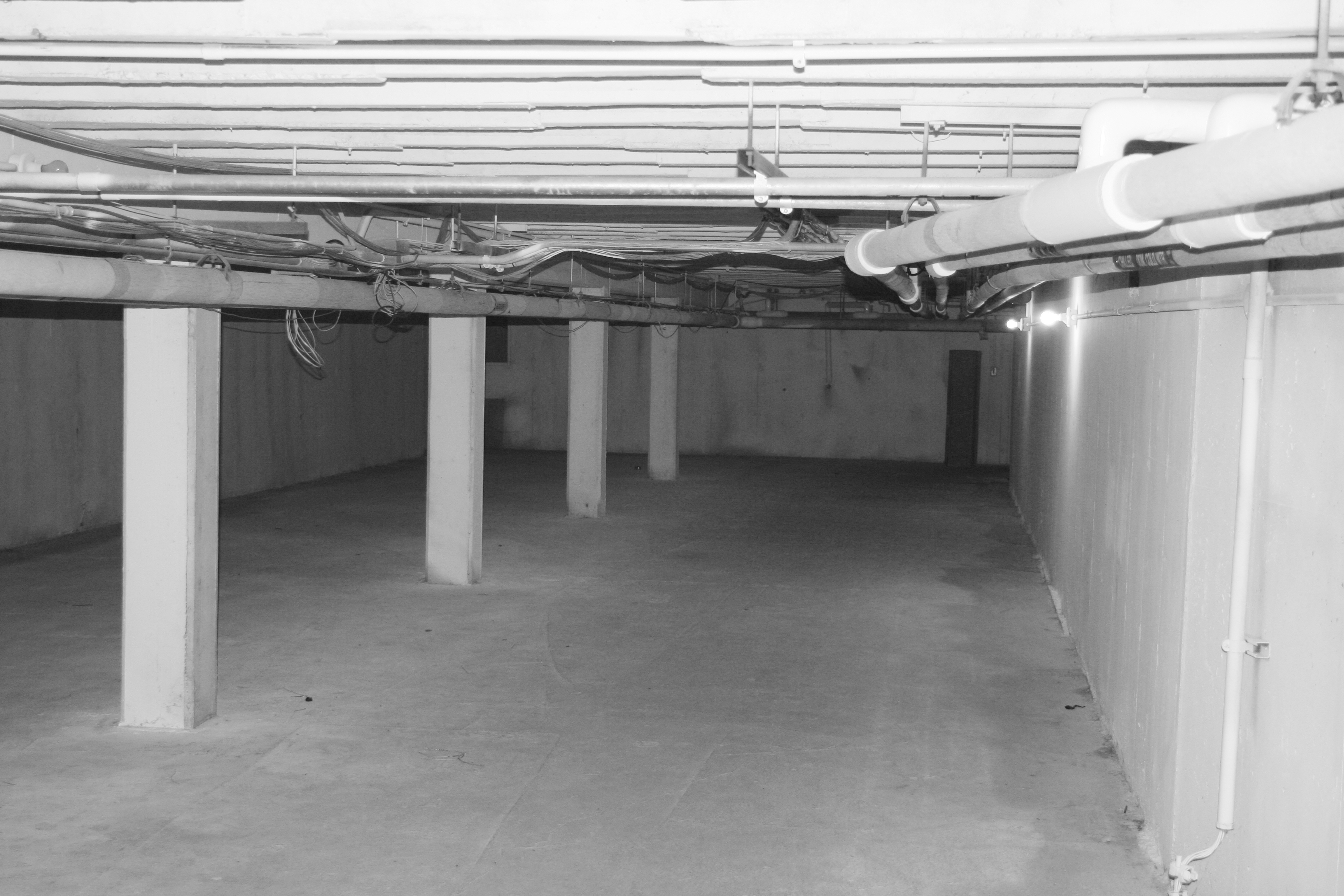
So sometime in about 1982 I started a lunch-time exercise routine that began with “running in the tunnel.’   There’s nothing sexy about running in the tunnel.  Dark, dingy, not very well-lit.  Poorly ventilated. The smell of crusty pipes. This particular tunnel had columns in the middle so that it was set up kind of like a swim lane.  The tunnel was 1/3 of a mile long, so if you wanted to run 2 miles, that’s 6 lengths, or up and back 3 times.  I actually found a picture of the real deal on the inter-webs.  It’s exactly how I remembered it.

boeing-tunnel-1

Most groups at Boeing, even the engineering groups had fairly strict rules with respect to the amount of time you could take for your lunch hour.  Officially it was 40 minutes.  Heading out to the tunnel, dressing down in a very crowded seriously smelly locker room a couple of stories above the tunnel, doing the actual run, shower and get back to work took the full 40 minutes and then some.

People say that running around the track is boring.  Try a tunnel.  But I managed to get myself down there a few times a week and get a routine started, and I felt better and stronger almost right away.

When the weather warms up, it’s really hard to justify heading down to the tunnel, but the problem was, there weren’t that many good routes to run outside the plant.  But there were a few and as human nature dictates, if you’re stuck in a crummy situation, you start  to look for something better.

A few months in my times were getting a little bit faster and I’d met some guys who were determined to do the outdoor routes when the sun came out.  If we really hustled, we could get 3 miles in and get back to work without being too tardy.  This was much more enjoyable.

A few years later I got transferred to a building that wasn’t inside the main complex, but about 1/2 mile from the main plant.  And it had its own little locker room.  This is where my running started to take off a bit.  The next thing I knew I was doing 4 miles at lunch.  And then 6.   I was getting hooked.  Almost every day I’d head out with a group of guys and taking 4-6 miles at lunch with a ‘long’ one on the weekends of closer to 10.

Summer came around and I was with the family on a 4 day weekend at Seaside, Oregon.  I was 30 at the time.  The house we stayed in was a small 2 bedroom house but we used to pack 10 or more people in there on any given weekend.  What this mostly meant was that the bathroom (singular) was backed up most of the morning so I might as well go for a good long run.

The day before, in town I ran across a pamphlet for the Portland Marathon.  I grabbed it with the idea I’d learn about it later.  On my Saturday run, all I could think about was the Portland Marathon and how I was in the best position to give it a go right now, and if I don’t do it this year, I probably never will.  That particular day I ran up to Gearhart and back and put in about 11 miles.

By the time I got home I made the decision to go for it.  I read that pamphlet 100 times by my bedside.  The marathon date was at the end of September and it was about the end of June now.  I had 3 months to get my miles up from the 30 mile range to 50, with long runs of 20+ in there somewhere.  I put together a very detailed plan.  At that point I was almost obsessed with the idea.  I knew what time I wanted to average, what time I wanted to achieve and constantly strategized on how to best train for this event.

Along the way I ran my first 10k and in early September I entered a half marathon.  Enjoyed both of those but the idea of doing a full still seemed pretty daunting.

The big day arrived and I was excited and ready.  The weather was perfect for the 7am start.  I ripped off the first 10 miles at about 8 min/mile pace and felt really good.  I think I started slowing down a bit around 15 miles, but pressed on.  At 23 I was pretty dehydrated and decided to actually stop at the water table and get some water, but walk fast while drinking it.  After about 100 yards I decided to get back in running form again and everything stiffened up.  That was a scary moment but I got past it.  I’m guessing my last 3 miles were at closer to 10 min/mile pace.  Pretty slow but I was so happy because at that point there was no doubt I was going to make it.  And I did.  3:43 and change. Pretty much exactly the time I was striving for.  Anything under 3:45 was going to be considered a win for me.

What brings me down memory lane this evening is the thought patterns I have as I hop on the treadmill in the morning at age 58.  I’m way overdue for some exercise.  Way overdue.  To be completely honest, I think I’m on the verge of a Don Cobane moment.

I can’t even come close to the times I used to put in.  Even on the treadmill now I’ve got more of a walk/run routine going, so it’s not really even running yet.  But what keeps me going some days (like this morning), is just the thought that “It all starts in the tunnel.”

The tunnel was only 2 miles and at a slow pace at first.  But the point is I started somewhere and didn’t just sit in that chair resigning myself to the Boeing spread.

I believe most people have instincts that drive us to compete against ourselves.  If I did 2 miles yesterday, maybe I’ll do 2.25 next week because 2 miles is getting boring.  And while I’m at it, I might try to improve my time by 10 seconds too.  It’s just human nature.  But in order for human nature to have a chance to succeed, you gotta get down to that tunnel and get going on something.

In Praise of Republicans against Raunch

There’s an ancient proverb that says “The enemy of my enemy is my friend.”

I’m reminded of this because I’m both encouraged and fascinated by the list of long time republicans coming out as #NeverTrumpers.  I’m talking about prominent conservatives who have been publicly supportive of the party for decades who are now openly criticizing the president on all forms of media.

As I read the tweets of Rick Wilson, Bill Kristol, Margaret Hoover, Cheri Jacobus, and Ana Navarro for example, I find myself in complete agreement with much of what they are saying.  And these are long time staunch, prominent republicans.   It’s inspiring to see people of stature have enough courage to choose country over party.

So what happened?  My first thought goes back to how brutal the primaries were and how Trump’s nicknames for his opponents ended up sticking.  Little Marco.  Low energy Jeb.  Lyin’ Ted Cruz.  He picked a fight with the establishment from the first debate.  This cost him the support of the entire Bush family and many of its loyal followers including Condoleezza Rice, Colin Powell, Tom Ridge and party pundits Cheri Jacobus, Margaret Hoover, and Steve Schmidt.  Not long ago, these were frequent guests on Fox News supporting candidates McCain and Romney.

Next was the infamous kerfuffle with Megyn Kelly during the first debate.  The fallout from the was a loss of support from strong women like Ana Navarro and Jennifer Rubin.

It’s much easier to come out as a #NeverTrumper when you are personally attacked.

When George W. Bush was president, I wrote plenty on policy differences and the inherent greed of the republican party, but I never once suspected him of being a racist.  In fact, just the opposite.  He always went out of his way to be inclusive of all Americans. He understood basic decency in addition to the political necessity of having moderate Muslims on your side to win the war on terror.  In this regard, he was a good man.

Charlottesville was where I think Trump lost the last vestige of hope he had from the republican establishment.  His “both sides” narrative caused several other prominent republican figures to join the #NeverTrump bandwagon.

In the Netflix series “The Crown”, prince Phillip sent Charles to the same boys school he attended as a child – and hated.  Predictably, Charles hated it too.  It was a clear example of the “strict father” approach.  The “my dad made me do things I didn’t like, but it made a man out of me” mindset.

It used to be that you could count on the representatives of the party to be supporting a platform straight from the strict father paradigm, complete with personal responsibility, hard work, love of God and country.  There’s nothing inherently wrong with this message.  The issue has always been where to set the social safety net.  Democrats have pushed more towards socialism.  Republicans would like a society where, if you make bad choices, that’s your tough shit.  They don’t understand the concept of having been born on third base, and the message about compassion got lost somewhere between the sermon and coffee and donuts.

But recently the party tent has gotten a little too wide for many.  It’s as if long time republicans got invited to an upscale Ivy League frat party, got all dressed up and expected an evening of social snobbery and cigars, but then the host let the Nazi’s from down the street in, and started excluding people at the door for their religion and race.  And then, late in the evening the jokes about pussy grabbing started.  At that point, some started to realize they were living the Animal House experience, felt uncomfortable with the level of raunchy behavior now inside the party tent and decided to check out.

During the 1980 presidential campaign Ronald Reagan was asked why he left the Democratic party.  “I didn’t leave the party”, he said.  “The party left me.”  I’m pretty sure this is example what is happening with the current GOP.

Twitter gave Trump a direct line to the American people and it was an effective tool for him to get his message across, however deceitful.  But there’s also a saying about what goes around comes around.  The same tool that can prop a guy up to the highest office in the land can also take him down.  If you have the chance, I’d encourage you to follow these courageous republicans on Twitter.  I’m liking what I am hearing because it gives me hope we can get back to some sense of normalcy.

===== Twitter Handles of Prominent #NeverTrump Republicans =====

@BillKristol, @CheriJacobus, @TheRickWilson, @SteveSchmidtSES, @ananavarro, @GeorgeWill, @nytdavidbrooks, @douthatNYT, @MJGerson, @MargaretHoover, @JRubinBlogger, @benshapiro, @CondoleezzaRice,