George Carlin once said the answer to world peace is an international square dance every Friday night. Think about it. I can’t shoot Igor, he was at the dance yesterday and he’s a cool guy!
I do not see a counterargument that would work very well.


George Carlin once said the answer to world peace is an international square dance every Friday night. Think about it. I can’t shoot Igor, he was at the dance yesterday and he’s a cool guy!
I do not see a counterargument that would work very well.
I’ve changed my mind. Since ICE appears at our schools to kidnap children, I think every teacher should be required to carry a gun.
This ought to be interesting.
On February 9th, the Super Bowl will feature the Seattle Seahawks vs. the New England Patriots. In less than two weeks, two teams from two very liberal cities will play each other for the NFL title at one of the most left-leaning metropolises in the United States. Approximately 75,000 people will make their way to Levi Stadium in the Bay Area on Super Sunday. After the tragedies in Minnesota, I don’t think the good people of California, Washington, or Massachusetts are going to be in the mood to put up with ICE agents milling around the premises, searching for people with the wrong color of skin or accent. Yet Kristi Noem thought the Super Bowl presented a real opportunity to send her crackpot team of Proud Boys on a people-hunting safari.
The first problem Homeland Security has is that people no longer take ICE agents seriously. Since most of the recruits look like they couldn’t run a mile in under 15 minutes if their life depended on it, have no training in police work, and give off a strong vibe of societal dropouts, they are seen as the equivalent of Mall Cops in fake Army garb.
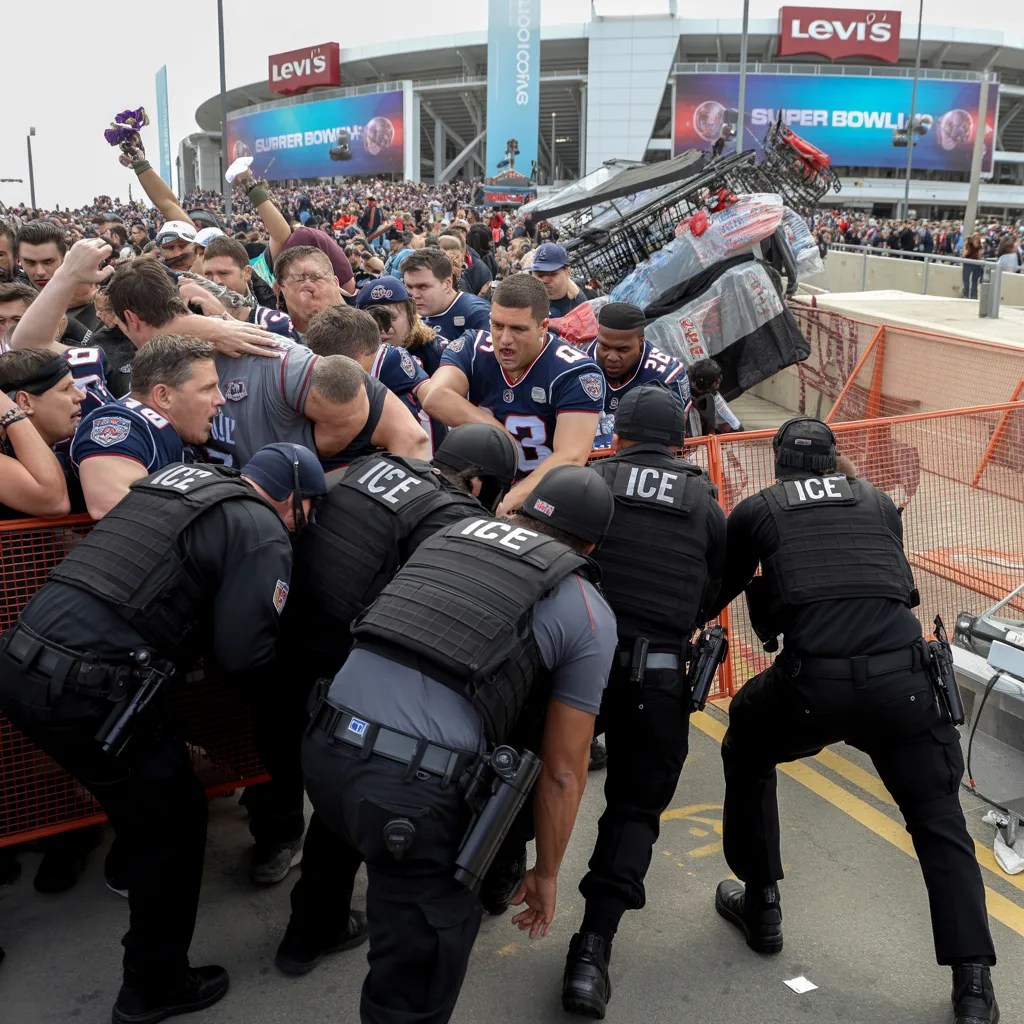
My guess is that if ICE starts hassling ticket holders for no apparent reason, they will be met with serious resistance and seriously outnumbered. GTFOH!
I don’t see this ending well for ICE. It’s kind of like throwing a party and then the Pharaohs decide to show up to crash it, only you have 75,000 people on your side.
On January 7th, Renee Nicole Good’s life was taken by ICE officer Jonathan Ross. She was shot in the face while driving her Ford Explorer, trying to exit a hostile scene in Minnesota. Republicans couldn’t wait to get booked on news channels so they could spread the “Obey in Advance” message that aligns with their keeping people in fear strategy. The problem is, fear doesn’t work. It never has. The event sparked protests across the country, rivaling those of George Floyd and Trayvon Martin.
The citizens of the United States, in general, can protest without too much fear, but there are exceptions. That could change, though, depending on how far Republicans and the Supreme Court are willing to allow the Trump administration wage their war on people of color. As ICE raids more cities and our friends and neighbors are kidnapped from their schools and homes, there will be more and bigger protests. Bank on it.
The people of Iran, however, do live in fear. In the past month, it’s estimated that between 2,400 and 3,400 people have been killed in the Iranian regime’s crackdown on protests. Yet we see women throwing their hijabs in bonfires and dancing in the streets. That is courage. Everything to lose and no fucks left to give. My hat is off to them.
The thing is, fear works until it doesn’t. I have a nasty habit of relating everything back to religion, but it’s relevant in this case. Growing up, we’re taught to fear hell. The message is behave, or else! Youth are exposed to the idea of a fiery place where they’re being burned alive for eternity with no cookies and no Xbox. If that’s not an incentive, then I don’t know what is. But it only works as long as you believe the threat. Once the idea of a place like hell seems a little fishy, then fear of it no longer applies. It’s the same thing with protests in the United States and Iran. At some point, enough people get out in the streets and say, “We dare you to come get all of us.” The reward of gaining what you’re protesting for makes the risk of joining others in the protest worth it.
My siblings and I were raised in the Catholic tradition. For me, this included five years in parochial school. It was the full enchilada—Church, School, and Parish life, all reinforced at home. In grades 1-3, the message was more aligned with fear. In no uncertain terms, there was this omnipotent God out there, who could get mad and destroy things, even entire civilizations, if he didn’t like how things were going. And if you dared break any of the 10 Commandments, it’ll be eternity in hell for you. In retrospect, it was only a reflection of the fear and pestilence narrative from the Old Testament, but we didn’t know that at the time. We chose to obey in advance, if for no other reason, to keep the peace. The problem is that as kids get closer to the age of reason, many say, “Wait a minute! I’m not sure I buy into this eternity in hell narrative,” and the fear-factor strategy loses its effectiveness.
Catholicism has a well-deserved reputation as a religion heavily steeped in the guilt factor. I experienced this firsthand. It comes into play when the education system begins to focus on matters of conscience. So instead of talking about hell to get you to behave the way they want, they might ask, “How is your conscience doing following your nasty behavior towards John on the playground?” Of course, we would drop our heads and say, “Not so good.”
But here’s the thing. Instilling a conscience in students can be an effective tool for a person for an entire lifetime. Maybe Catholicism went a little overboard with it, but I’m glad they finally shifted away from the fear factor and onto another message I could actually relate to. Be considerate. Other people’s feelings matter. Don’t be a pig. And if you don’t, you should feel guilty! Not because God is going to send you to a fiery place, but because you want to be a good human being, don’t you? Don’t you?
When I used to interview candidates for jobs at a former employer, we tried to look for people who weren’t job hoppers. We were about to make an investment in a new hire, and the investment doesn’t pay off unless the person can actually use the training we’ve invested in them and move the ball forward for the company. If I liked a candidate enough, I’d probe a little into their background to see whether they had more long-term interests and might stay a while. Of course, they can lie, and the company would have no recourse, but I played this one straight up. I would just make a statement to appeal to their conscience, but in a humorous way. “We really like it when candidates work out and stay a few years, and that’s what we would hope from you. Of course, every employer is at-will, and you can do whatever you need to, but if you were to leave, we would want you to feel guilty [usually laughs].” Nothing threatening about it, just appealing to your good sense of a fair deal.
Sadly, the conscience strategy has no chance with the Trump administration because they don’t have one, so we have to fight their egregious, racist, greedy policies with activism and resistance, and then vote people in at all levels who have a conscience.
This mystery of who killed JFK still remains unsolved. The Warren Commission concluded that Oswald acted alone, but some believe that Oswald’s connection to Cuba was more than a coincidence. JFK did attempt to invade Cuba in the now infamous Bay of Pigs incident.
If anything were to happen to Trump, the right-wingers would love nothing more than to blame it on a woke liberal with Trump Derangement Syndrome. Odds are, though, that if there were to be an unhinged assailant, it’s far more likely to be a nut-case from his own party. You don’t have to look any further than the incident that nicked Trump’s ear in Wilkes-Barre, PA, or Utah Valley University and Charlie Kirk’s unfortunate demise to find examples of disgruntled MAGAs with a gun and an axe to grind.
As recently as yesterday, Trump, having visions of grandeur, waxed poetically from Air Force One about taking over Colombia, Cuba, Greenland, Iran, and Mexico, in addition to his recent ‘capture’ of Venezuela’s Nicolás Maduro. Greenland wasn’t a huge surprise, as he’s shared his unfiltered thoughts about a hostile takeover there in the past, but the others on the list are new territory for him.
The problem for right-wingers, then, is that once your leader threatens over eight percent of the world’s population with hostile takeover, it will be much harder to blame it on a bleeding heart liberal in your own country. The Secret Service would be wise to hire more personnel to keep an eye on Pelé (that’s what his caddies call him, because he kicks his golf ball out from behind trees), lest he suffer the same fate as the guy who pissed off Castro.
In 1985, when I lived in Marysville, Washington, my good friend Dave Aldrich sent out his annual Christmas letter. A Berkeley grad, activist, and FDR Democrat, Dave was convinced that Republicans have been working to unravel the New Deal since it was enacted. Needless to say, he was not a fan of the Reagan Administration at the time.
In his annual holiday letter, Dave went on a two-page, nonstop, political rant about everything that was wrong with the country, railing against Republicans using George Will-level vocabulary, and then signed it “Merry Christmas.” It was the funniest Christmas letter I have ever received.
I’ve often been tempted to steal his idea, but there’s no way I could ever match his wit or vocab, so I’ll just admit up front that, after the cruelty I witnessed in 2025, I seriously considered it.
I’m thankful that I don’t need to, because for those who reached this site via a link from me, I’d be preaching to the choir. It was encouraging to see you out at the protests. Keep up the good work. We all know the assignment.
Other than living in Orwellian times, there were a lot of positives to share about this past year.
To say that retirement is agreeing with Donna and me might be the understatement of the year. We are both thriving. After spending the first couple of years in retirement getting health issues out of the way, we feel we’re engaged in fulfilling activities independently and with friends, family, and each other. We appreciate the freedom that comes with being retired and don’t take it for granted for one second.
Donna joined the Dahlia Society and is learning how to fill the yard with … more dahlias. There’s a lot more to it than meets the eye. Some people are really into it. They have shows and competitions with people judging dahlias that cost hundreds of dollars… for a flower. Donna isn’t like that. She just wants to learn how to make our little plot of land beautiful with dahlias and meet like-minded people. She’s been able to spend more time in the shop doing her art projects. Bold ideas are starting to surface. We’ll keep you posted.
Donna’s mom, Janet, turned 95 this past year and is requiring more care than in the past. We’re thankful that she’s agreeable in her environment, and that the staff at her care center enjoys her. Donna has reached full stride as a sports fan this past year. The very thought of March Madness brings her immense joy. She’s now an avid viewer of sports on television, especially when it’s playoff time. When I look at our shared calendar, all the Duck games and times are already listed. Her golf game gets better every year, and the sports attire section of her closet is growing. I picked the right wife.
I spend my days making difficult decisions among my seemingly endless list of hobbies. I’m still involved in sports officiating (added volleyball to the mix this year), get out for some golf, walk with my buddy Dan, and am still writing the same book I wrote about last year (It’s Complicated, Isn’t It?”). It’s a work in progress. The more I write, the more I discover. I spent considerable time in the music studio this year, recording songs and putting them out on YouTube (William Toner).
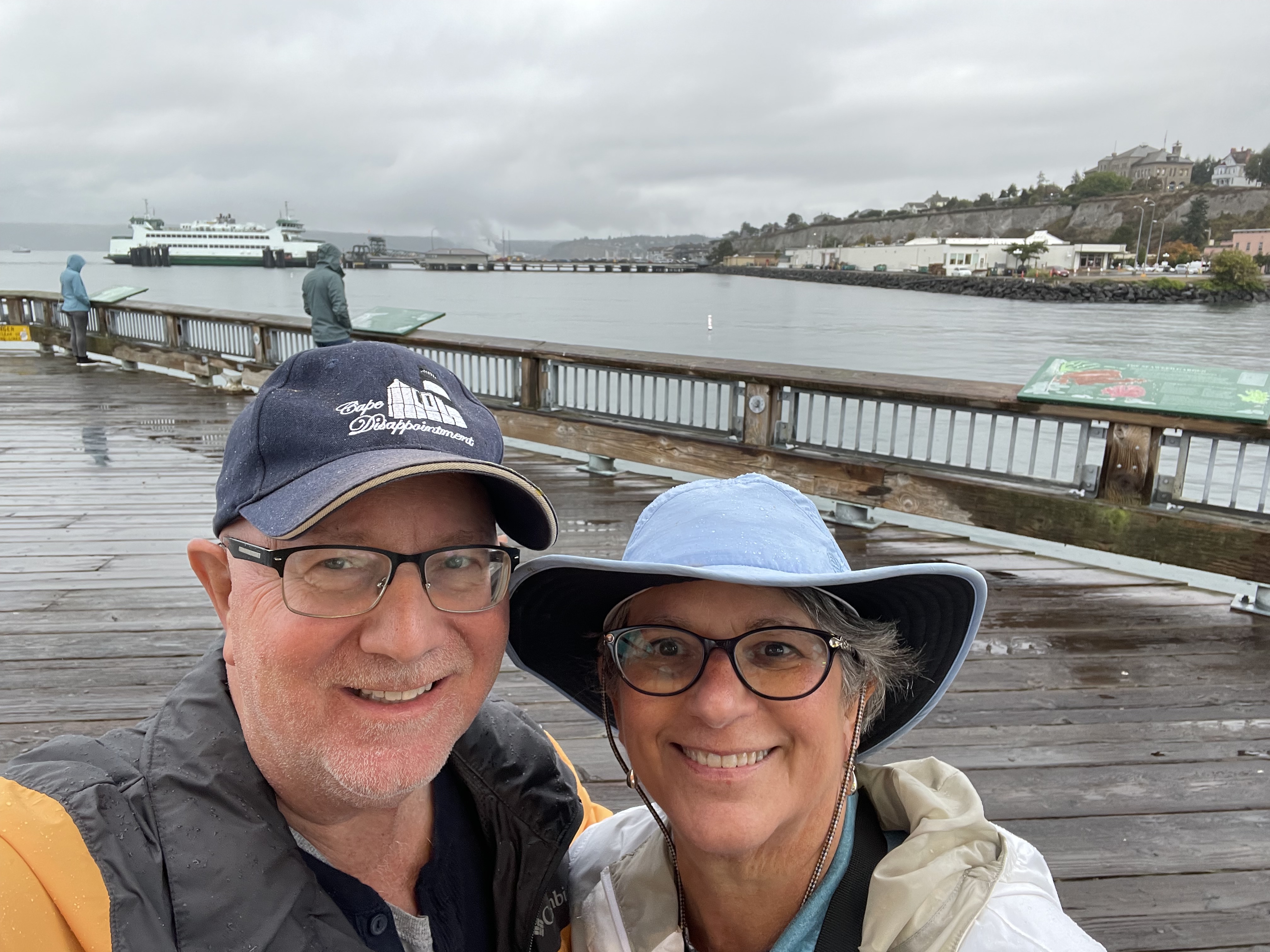
Our travel schedule included exotic destinations like Seattle, Neskowin, Port Townsend, and Altoona, Washington. We have adopted a ‘short getaway’ strategy that fits well with our lifestyle and retirement budget. We try to pick places where we can bring Pickles because Pickles is spoiled, and snorts if we leave her at home.
I helped my son Robby build a shed this past year from a set of plans he bought online (see pics). Those who know me know it wasn’t work, it was all fun. I love building stuff, though I’m far from being a pro. What we didn’t know, we figured out. Emilia helped by adding artwork to the project with her felt pens. Rob and Ariana thought it might even be too helpful.
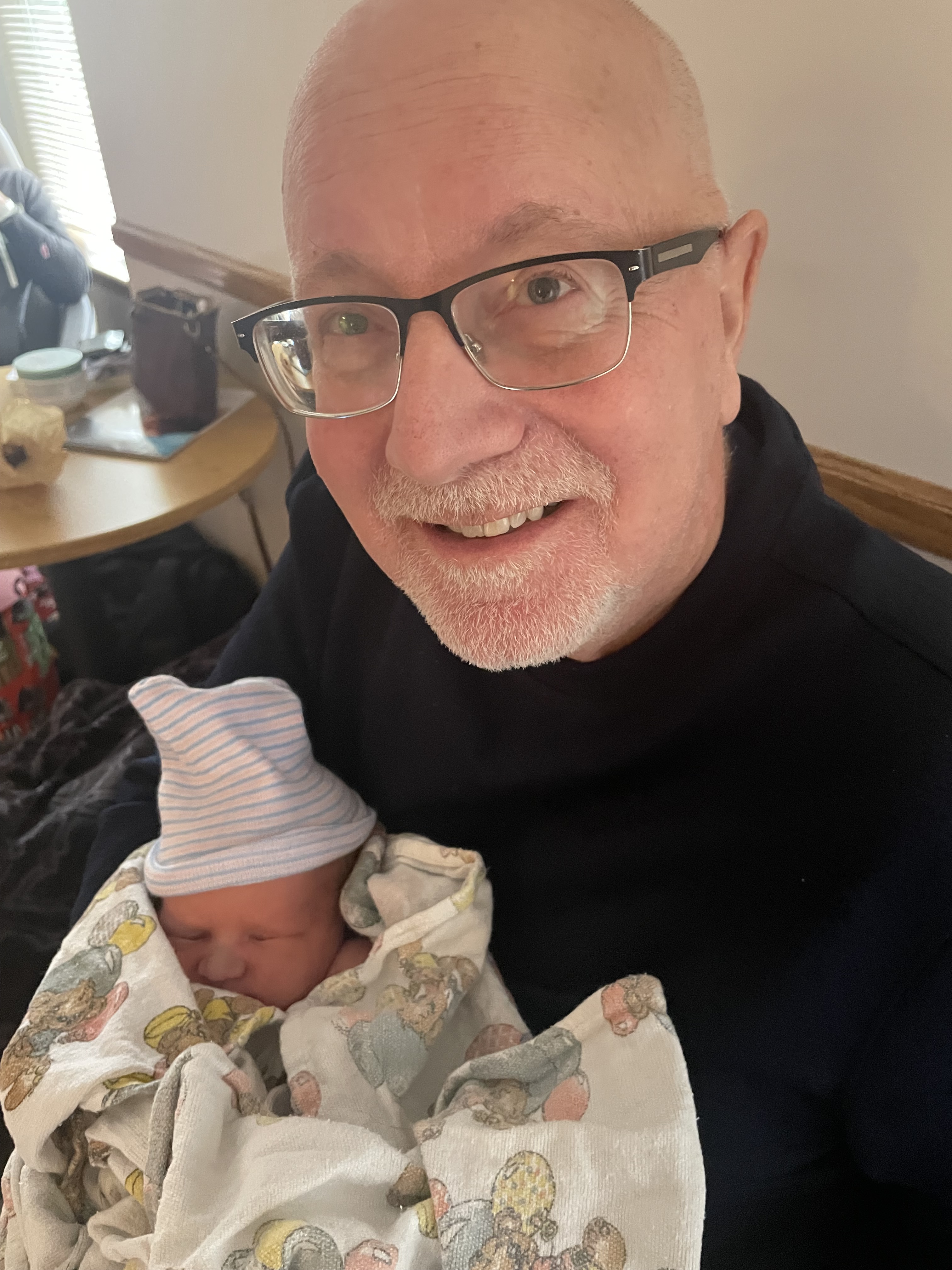
Two days ago, we welcomed Nicholas William Toner into the family. Proud parents Dan and Emily are now a family of five, complete with 3 car seats in the back. We really enjoy hearing what comes out of the mouths of babes. It’s hard work raising a family, but when the kids crack you up with what’s on their mind, it’s all worth it. When we see Gwennie and Ellie, they never disappoint.
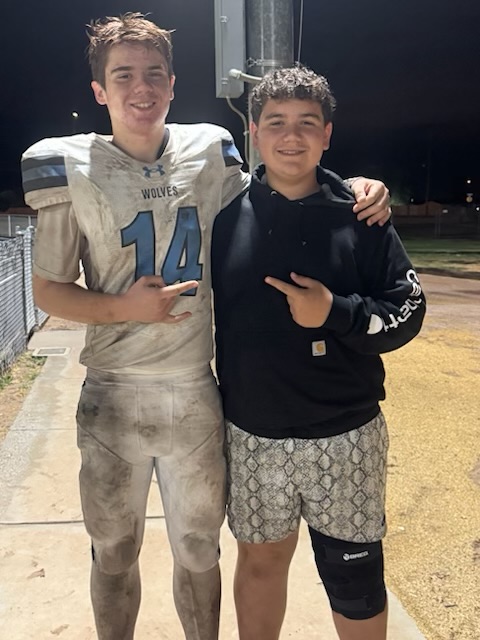
We are looking forward to seeing Kelli and the boys at Christmas and learning about their football season. Kaden graduates this year, and Karter is a Freshman. We are very proud of the young gentlemen they have become. Sports fanatics and good students. What more could you want?
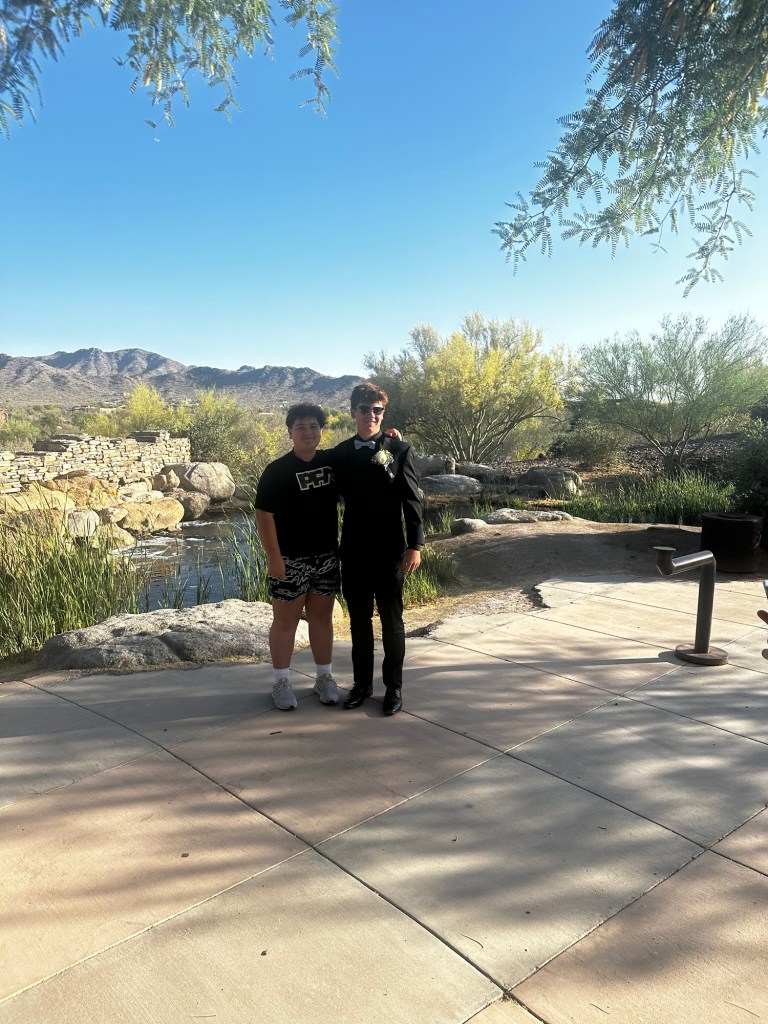
With that, in no particular order, I leave you with some memories from 2025.



















James Carville famously quipped, “It’s the economy, stupid.” We know that the Biden / Harris ticket took it on the chin for the price of eggs. That’s why democrats would be wise to latch onto the latest catch-phrase, “The affordability crisis”, and make it a party platform message until republicans are so sick of hearing it that they run for cover. They should repeat those three words 20 times a day, every day, running up to the midterms.
Trump likes to pretend there’s no problem, but the grocery bill doesn’t lie. Everything is up, and there’s no relief in sight. Outside of the kitchen table, everything else is up too. The tariffs have increased the price of cars, clothes, furniture, appliances, and lumber, just to name the biggest hitters. And then there’s health care. Premiums have skyrocketed to the point of pricing people out of insurance entirely, and they haven’t even cancelled the Affordable Care Act yet.
So keep saying those three special words, my friends. The affordability crisis. They don’t like to hear it, but they can’t deny it. It’s a winning strategy, and besides, what goes around comes around.
I believe we are about to see karma come full circle. Donald Trump has used people his entire life. Many have gone bankrupt in servitude to the teflon Don. Michael Cohen was useful until he wasn’t. Rudy Giuliani got taken to the cleaners for his association with Trump, and Trump hasn’t helped him one iota. So long as they provided him with some benefit, they got a seat at the table. Once the benefits stop, you’re out.
Trump is under the illusion that his populist movement has been successful. What he doesn’t realize yet is that Peter Thiel, Sheldon Adelson, Harlan Crow, and Ken Griffin have been using him. While he’s been useful to the mega donor class and the Republican Congress, they have looked the other way and put up with his tantrums.
What is going to be interesting in the next year is to see how long it takes for the mega donors and Republicans to throw Trump under the bus. He’s already a lame duck. If he’s as ill as what our eyes are seeing, he could be subjected to 25th Amendment treatment at any time. You can bet that the people holding the purse strings have been thinking strategically for some time now, and that there’s no way they are going to go down with the ship.
I think he’ll be out in ’26, assuming he lives that long. The MAGA movement has run its course. The thrill is gone.

Because ridding the United States of Obamacare isn’t enough for Republicans and the Project 2025 folks, SNAP benefits are expiring in most states this week. Now you can get sick and be hungry at the same time. While I abhor the cruelty, I love the strategy of the Republican party. Can you say self-mortification?
Meanwhile, Elon Musk was able to secure a staggering one trillion dollar package from Tesla shareholders, should he meet certain targets. How long can this shit go on?

What should be our mindset when we open the Bible? How did these books come into being? This is a core question that isn’t often addressed. What other essential questions must we ask ourselves about our belief in Biblical texts?
Most folks don’t think very hard about using the phrase “the Bible.” We often assume we’re communicating with people who already agree with us about what “the Bible” is, but that’s not always the case. Scholars hold that there is no single Bible because the Bible as we know it today is a collection of texts written by more than one hundred authors and as many or more editors who wrote, edited, and compiled the Bible in three different languages across two continents over the course of eleven centuries. The Bible is the result of a compilation process — and there have been many compilations.
In the 21st Century, the most popular translations include, but are not limited to, the King James Version (KJV), the New International Version (NIV), the English Standard Version (ESV), the New Living Translation (NLT), and the New American Standard Bible (NASB). These versions trade off readability and fidelity to the original texts to appeal to different audiences with varying goals when reading the Bible.
Inspiration, Inerrancy, and Univocality
My starting point is to ask three relevant questions. 1) Is the Bible the inspired word of God? 2) Are biblical texts inerrant? 3) Do Biblical texts speak with one single, unified, and consistent voice and from one single, unified, and consistent perspective?
Since no supporting data exists for any of these beliefs, they can only be asserted. In a discussion about what the Bible says, those assertions can mean anything only if the participants agree to grant them that authority.
While the Bible can occasionally be used as a historical document, it contains many gaps. Some suggest that this is where many biblical innovations have been carefully curated to fill gaps in stories lacking critical details. Dan McClellan, a modern-day biblical scholar, strongly advocates interpreting the books of the Bible literarily rather than literally, considering the author’s rhetorical goals. He offers the following explanation:
“Every last word of the bible is a piece of literature, meaning a human author wrote it down with a specific literary genre or combination of genres or innovations on literary genres in mind using conventions and idioms and allusions to try to draw out their rhetorical goals which usually had more to do with the structure of power, values, or boundaries than with just reporting on an event. And so we don’t do justice to what the authors were trying to convey with their texts when we ignore all that and just imagine how these things would have happened historically. In addition to the fact that that’s not what the authors want you to do with the text. Most of what we have in the Bible has no historical reality behind it. The stories in the bible are overwhelmingly literary creations, so they never existed on anything other than a literary level. So, when we try to create a historical background for what is going on, we are merely making things up, which will not lead us to a better understanding of what the author was trying to convey; it will lead us to a worse understanding. The authors had several objectives in mind when creating the texts, and if we overlook these, we will not have a good chance of understanding what made those texts meaningful and valuable to them. Instead, we will overwhelmingly subordinate the texts to our own rhetorical goals — what we want the text to do for us.” — Dan McClellan
Though not his primary goal, McClellan undermines the foundation of the Church’s basic tenets. Adam, Eve, Abraham, and Isaac are post-biblical innovations, along with the Trinity, Original Sin, the Virgin Birth, and Biblical Inerrancy. McClellan is an educator and, thankfully, an honest voice sharing his knowledge with anyone who will listen without regard to whose feathers might get ruffled.
His opinion appears to be in the minority regarding the views of church leadership, but is he wrong? Or is he a trailblazer? He’s got an enormous following on social media over 1 million followers, and those who challenge him on an intellectual level usually lose badly. Facts matter.

Inspiration
Many Christians believe that Biblical texts were divinely inspired. To quote The Moody Bible Institute:
“We believe that the Bible is God’s Word. Moody Bible Institute’s doctrinal statement affirms, “The Bible, including both the Old and New Testaments, is a divine revelation, the original autographs of which were verbally inspired by the Holy Spirit.”
What are the criteria by which we determine whether any given statement in the Bible is the inspired word of God or not the inspired word of God? Does the Bible claim to be the inspired word of God?
Many point to 2 Timothy 3:16, which says, “All Scripture is God-breathed and is useful for teaching, rebuking, correcting, and training in righteousness,” as definitive proof of biblical inspiration. But can a biblical text point to itself as scripture? Scholars point out that the author was writing in the late first or early second century CE, but they wanted us to believe they were Paul writing in the 50s or 60s CE. They also point out that 2 Timothy 3:16 wasn’t itself understood as scripture by its author. The most likely interpretation is that the author was asserting the life-giving qualities of the scriptures and their utility as rhetorical instruments.
When I think of the term ‘divinely inspired,’ I envision God hovering over an author, dictating exactly what to say. Or maybe he doesn’t hover over the person. Since he’s God, perhaps he simply inserts the exact thoughts into the author’s head before they begin writing, and that takes care of it. Physical presence would not be necessary because with God, all things are possible. In any case, the claim divinely inspired implies with certainty that a text is the word of God. This asserts that “The Bible is divinely inspired” all the more difficult to accept as a true statement. The Bible contains between 66 and 73 books, depending on one’s religious affiliation. This translates to approximately 31,000 verses or roughly 800,000 words. God said all of this through scores of prophets penning scripture for him? Really? That’s seems far-fetched.
The problem for apologists is that the phrase “The Bible is divinely inspired” is binary. It’s either the case that every single text is something God said indirectly, or it’s not. They can’t have it both ways.
Psalm 137 presents a challenge in this regard. The story recounts the Israelites’ sorrow and exile in Babylon. Scholars describe the story as a Revenge Fantasy. Verse 9 is an example of how the Israelites’ bloodlust feelings about being mistreated: “Happy is the one who seizes your infants and dashes them against the rocks.” Apologists claim that, in this case, it’s NOT God speaking. But… I thought you said ….
Numbers 31 and Samuel 15 are also examples where it is indisputable that the God of Israel repeatedly commands the slaughtering of innocents. But… I thought you said …
On the issue of slavery being condoned by the Bible, the books of Leviticus and Exodus condone the practice of slavery. So this is God speaking?
It’s interesting that Church pastors who wrestle with these issues when confronted by their parishioners — their interpretations of the Bible get more nuanced. Of course it does.
Inerrancy
Many of the faithful refer to the Bible as “The single source of truth”, yet it doesn’t take a Rhodes Scholar to find discrepancies that easily squash that assertion. The genealogies of Jesus in Matthew 1 and Luke 3 differ significantly, leading to different chronologies and ancestral lines. The differing resurrection reports in the Gospels (e.g., who arrived first at Jesus’ tomb, what they saw and heard) contain discrepancies. The Biblical age of the earth (6,000 to 10,000 years) conflicts with the consensus scientific view of ~4.5 billion years. There are issues with census counts, timelines, and scientific descriptions (e.g., flat earth) that do not align with modern knowledge.
Biblical texts have been copied and edited over centuries. Variations and errors have been introduced due to the human factor. Cultural biases and perspectives influenced the text. For this to be true, one would have to assert that not only was the original author’s work inspired by God, but God would have also shielded all of the editors and translators from making a single error. Asserting that the Bible is inerrant is a “sweeping statement”, tough to conceive of as being accurate.
Univocality
The Bible encompasses a diverse range of literary genres, cultural contexts, and perspectives, rendering its message complex rather than having a single, definitive interpretation. Since the data points to separate books, written by roughly 40 authors over 1,500 years, from different continents, in languages such as Hebrew, Aramaic, and Greek, along with the thousands of discrepancies contained within the texts, the case for univocality is a significant stretch—hard no on this one.
Ever-changing Biblical Law
At a high level, we began with biblical laws from the Old Testament. The rules of Moses were set in stone until they weren’t. In Acts 15, the Jerusalem council, after they determined that gentile converts to following Jesus didn’t have to obey the law of Moses, they changed it to: 1) Abstaining from sexual immorality, 2) Abstaining from eating things sacrificed to idols, 3) Abstain from the meat of strangled animals, and 4) Abstain from blood. They eliminated the entire law of Moses, except for four things, and three of them were dietary restrictions. Christians today have overwhelmingly rejected any kind of dietary restrictions because it doesn’t matter what the Bible says. It only matters what we say. We negotiated with the texts to get out of that one.
Every single existing law was abolished with the New Covenant, which completely replaced the Mosaic law and focused on loving God and Neighbor, Embracing grace and living righteous lives with humility, compassion, and forgiveness. If this were the endpoint, it would have been nice just to start here and not have to pay attention to all the other confusing laws. I’ve always wondered why the Ten Commandments are posted in the classroom. They no longer apply. If we must have some religious moral guidance, why wouldn’t Christians want to insist on the laws from the New Covenant instead?
Conclusion
Regardless of your beliefs on these questions, a healthy dose of skepticism is warranted regarding how people have interpreted biblical texts to suit their own goals. Those who assert that “God’s word never changes” fail to acknowledge that the Bible has changed over the past 2,000 years. Books were added, removed, rewritten, and mistranslated. If the Bible never changed, then which version are we talking about? The Bible also contains a variety of contradictory laws and laws that were later superseded or altered. Trying to make sense out of which commandments are relevant today, we have no choice but to rely on whatever religious hierarchical system we belong to to make a final interpretation, and then impose that interpretation on biblical texts. This is to help us identify which commandments we will prioritize, which we will reinterpret, and which we will declare no longer relevant.
The big question is, are these books holy and divinely inspired, containing a mandate of obedience, or not? Or are they man-made books, a simple accumulation of fragments and myths? If they are divine, how are we to escape their injunctions, such as “Thou shalt not suffer a witch to live.” What are we to do? God is saying Kill all witches.
We collectively overrule the Bible’s approval of slavery. There’s not a single syllable of the Bible that identifies the practice of buying, selling, and owning other human beings as a sin, but we identify slavery as wrong today. Why? Because we decided to overrule the Bible on that. The Bible was the authority on slavery until we decided that what we learned from Greek philosophy, the renaissance, the reformation, and the enlightenment were important lessons.
Similar shifts have taken place to different degrees over the centuries related to things like polygamy and celibacy. The Bible only has authority to the degree we grant it authority by way of consensus.
When we engage with biblical texts (which have no inherent meaning), we negotiate with them, and that determines what meaning they ultimately have for us. Whether we realize it or not, our opinions heavily influence the outcome. The unfortunate part of this is that some appeal to the Bible to baptize their opinion to endow it with God’s authority.
I am more comfortable being in alignment with those who seek to understand the Bible as its authors, editors, and earliest audiences understood it. Wouldn’t it be refreshing to be intellectually honest and acknowledge that the Bible condones and even endorses actions and behaviors that are widely agreed today to be harmful, hateful, or otherwise just wrong? Doing so doesn’t undermine or otherwise disparage or take away from the profoundness of the Sermon on the Mount, or Matthew 7:12, or 1 Peter 4:8, or Ephesians 4:32 which address love, compassion, and doing unto others.
Not if the Bible is viewed for what it truly is — a collection of texts written by over 40 authors with different agendas for different target audiences.
As a general rule, once we separate from the notion of a divinely inspired, inerrant book that speaks with univocality, we can realize that the Bible doesn’t tell us what to do; we tell the Bible what to do. We grant it authority based on our social and historical circumstances, as well as our identity politics, needs, and goals.
 View from my PDX Window